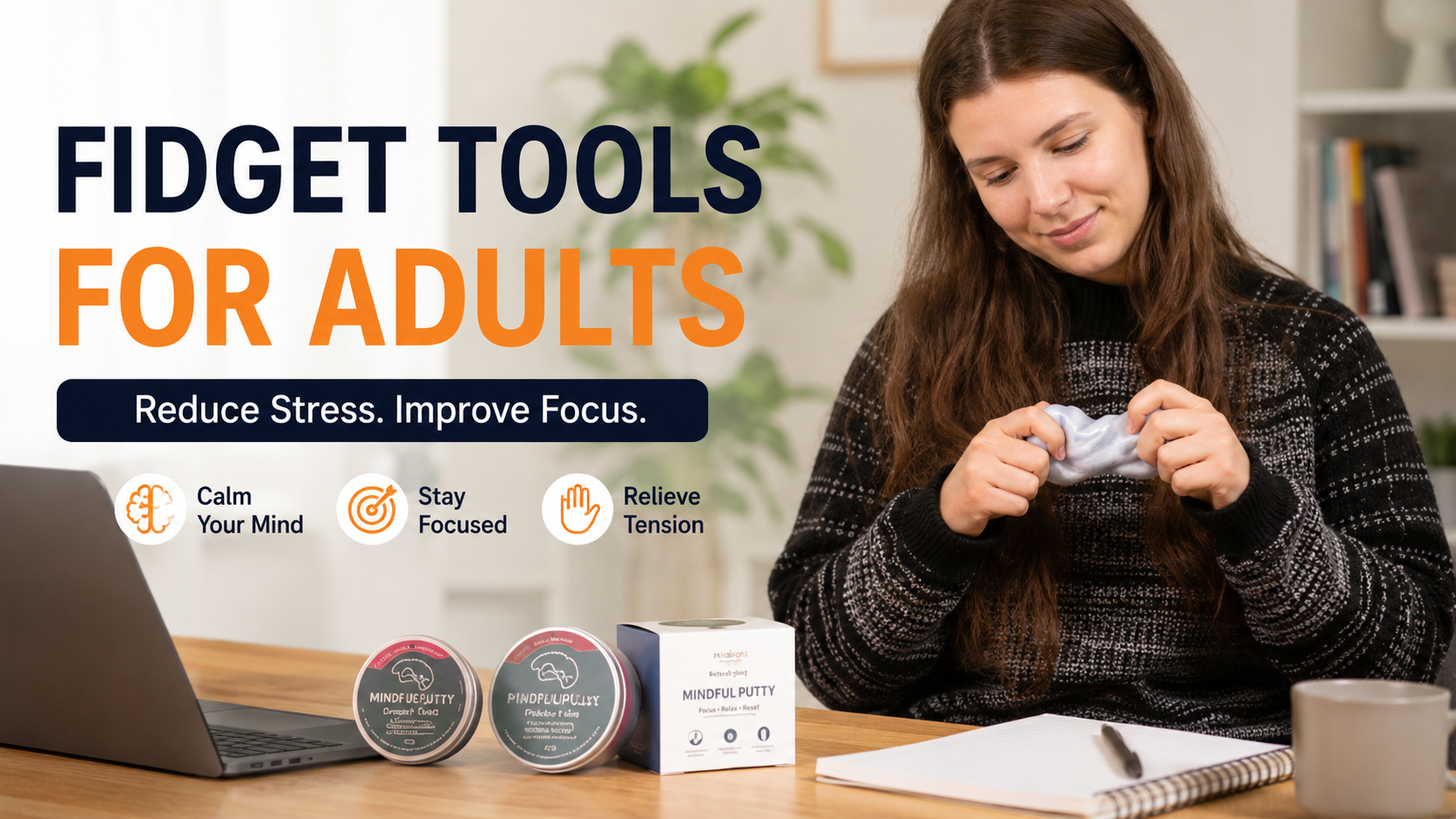
Best Fidget Tools for Adults With Anxiety
Fidget tools are often thought of as something for children, but adults fidget too. Tapping your fingers, bouncing your leg, clicking a pen, twisting a ring, or playing with an object on your desk are all common ways the body tries to release nervous energy.
For adults with anxiety, this kind of movement is not always a distraction. In many cases, it is a form of self-regulation. Your body is trying to find a way to manage tension, restlessness, or mental overwhelm.
The right fidget tool gives that energy somewhere useful to go. Instead of turning to your phone, suppressing discomfort, or letting anxiety build, you can use a simple tactile tool to help your body settle and your mind return to the present moment.
Table of Contents
- Why Adults Need Fidget Tools Too
- How Anxiety Shows Up in the Body
- Why Fidgeting Helps Reduce Stress
- What Makes a Good Fidget Tool
- Types of Fidget Tools for Adults
- Why Tactile Tools Work Better Than Digital Solutions
- Mindful Putty for Calm, Focused Fidgeting
- When to Use Fidget Tools Throughout the Day
- Conclusion: Simple Tools That Support Calm
Why Adults Need Fidget Tools Too
Adults often experience stress in ways that are easy to overlook. You may look calm on the outside while your body is quietly holding tension. You may be sitting at your desk, attending a meeting, replying to emails, or trying to focus, while your nervous system is asking for an outlet.
This is why fidgeting happens naturally. Your body uses small movements to release energy, maintain alertness, and create a sense of regulation. The problem is not the movement itself. The problem is when the movement becomes distracting, unconscious, or tied to habits that add more stress.
A thoughtful fidget tool gives you a more intentional way to channel that energy. It can help you stay engaged without needing to leave your desk, open your phone, or push through discomfort with clenched fists and shallow breathing.
How Anxiety Shows Up in the Body
Anxiety is not only a mental experience. It often shows up physically before you even have words for it.
When your nervous system becomes activated, your body prepares for action. That can create a sense of restlessness or tension, even if there is no immediate danger. You may feel the need to move, stretch, grip something, tap your hands, or shift positions.
Common physical signs of anxiety can include:
- Restlessness
- Tension in the hands, jaw, neck, or shoulders
- Increased heart rate
- Difficulty sitting still
- A constant need to move
- Trouble staying focused
- Feeling physically wound up or on edge
This physical energy needs somewhere to go. When it is ignored or suppressed, it can feel uncomfortable and distracting. When it is released in a controlled way, it can help the body feel more settled.
Fidgeting can be a practical way to give anxious energy a safe, simple outlet instead of letting it build quietly in the body.
Why Fidgeting Helps Reduce Stress
Fidgeting helps because it engages the body. Anxiety often creates excess physical energy, and repetitive movement can give that energy a rhythm.
Gentle, repeated motion can feel grounding. It gives your hands something to do, offers sensory feedback, and brings attention back into the present moment. This is one reason walking, pacing, stretching, or slow breathing can feel calming during stressful moments.
Fidget tools make this process easier to use throughout the day. Instead of waiting until anxiety becomes overwhelming, you can create small moments of regulation as soon as restlessness appears.
The key is choosing a tool that supports calm rather than adding more stimulation.
What Makes a Good Fidget Tool
Not all fidget tools feel right for adults. Some are too noisy, too bright, too distracting, or too toy-like for work, meetings, or everyday routines.
A good adult fidget tool should feel subtle, grounding, and easy to use without pulling all of your attention away.
Look for a fidget tool that:
- Feels satisfying to hold or move
- Offers smooth, repetitive motion or pressure
- Is quiet and non-distracting
- Is easy to keep nearby
- Supports focus instead of competing with it
- Can be used during work, calls, or short breaks
The goal is not to create more stimulation. The goal is to redirect existing energy into something calming and controlled.
Types of Fidget Tools for Adults
Different fidget tools offer different sensory experiences. The best choice depends on what feels most grounding for your body.
Soft and Moldable Tools
Soft tools such as putty or stress balls can be squeezed, stretched, rolled, or shaped. These are especially helpful when you feel tension in your hands or need a quiet way to release nervous energy.
Textured Tools
Textured objects provide sensory feedback through touch. Running your fingers over ridges, grooves, or smooth surfaces can help anchor your attention when your thoughts feel scattered.
Rotational Tools
Items that spin, roll, or rotate can create calming repetitive motion when used gently. For some people, this type of movement feels soothing and rhythmic.
Minimalist Objects
Simple, discreet tools with smooth movement or subtle resistance can be useful during meetings, calls, or desk work. These are ideal when you want support without drawing attention.
Each type works a little differently, but they all serve the same purpose: helping your body regulate physical and mental tension.
Why Tactile Tools Work Better Than Digital Solutions
When anxiety appears, many people reach for their phone. Scrolling, tapping, checking messages, or switching between apps may feel like a quick way to cope.
The problem is that digital coping often introduces more stimulation. Your phone gives you new information, more decisions, more notifications, and more opportunities to become distracted.
Tactile tools provide a different experience. They engage the sense of touch without pulling your attention into a screen. They help you stay with your body instead of escaping into another feed, tab, or notification.
That makes tactile tools especially helpful for adults who want to manage anxiety while staying present in their work, conversations, or routines.
Mindful Putty for Calm, Focused Fidgeting
Mindful Putty by Mindsight is designed for calm, focused fidgeting. It gives your hands a soft, moldable, tactile outlet that can help release tension without adding noise or screen-based distraction.
You can stretch it, squeeze it, roll it, or shape it in a way that feels natural and repetitive. That simple hand movement can help redirect restless energy and bring your attention back to the present moment.
Mindful Putty can be useful for:
- Reducing restlessness during stressful moments
- Supporting focus during work or study sessions
- Keeping your hands engaged during calls or meetings
- Creating a quiet, screen-free outlet for nervous energy
- Helping you feel more grounded without overstimulation
Because it is simple and tactile, it can fit naturally into different parts of the day without disrupting your routine.
Mindful Putty
A soft, tactile tool that gives restless hands a calming outlet during work, study, calls, or stressful moments.
Explore Mindful PuttyWhen to Use Fidget Tools Throughout the Day
Fidget tools are most helpful when they are easy to reach during the moments anxiety or restlessness usually appears.
You can use them:
- During work or study sessions
- In meetings or long calls
- While commuting or waiting
- Before sleep to release tension from the day
- During moments of stress or overwhelm
- When you feel the urge to reach for your phone
Using a fidget tool consistently can help your body learn that it has a safe way to release energy. Over time, that small habit can make stress feel more manageable.
Conclusion: Simple Tools That Support Calm
Anxiety often shows up in the body before it becomes overwhelming in the mind. Restless hands, tight shoulders, tapping fingers, and the need to move are all signs that your nervous system may be asking for support.
Fidget tools provide a simple way to respond to that physical energy. Instead of ignoring restlessness or turning to digital distractions, you can give your body a controlled outlet that supports calm and focus.
Mindful Putty offers a quiet, tactile way to release tension, stay present, and create small moments of regulation throughout the day.
Start small. Keep it nearby. Use it when your body feels restless. Let one simple tool become a gentle reset for your nervous system.