How to Create a Phone-Free Weekend Without Feeling Disconnected
A phone-free weekend does not mean disappearing from life. It simply means creating screen-free windows that help you reconnect with your time, your people, and yourself.
When your phone is always within reach, the weekend can disappear into scrolling, checking, replying, and reacting. With a few simple boundaries, you can reduce screen time without feeling cut off from the people and plans that matter.
Table of Contents
- Why Weekends Can Disappear Into Your Phone
- The Difference Between Being Connected and Being Available All the Time
- Why Phone-Free Time Can Feel Uncomfortable at First
- How to Plan a Phone-Free Weekend Without Going Extreme
- Simple Screen-Free Activities That Actually Feel Good
- How to Stay Reachable Without Constant Scrolling
- Using the Timed Lock Box for Weekend Screen-Free Time
- Final Thoughts
Why Weekends Can Disappear Into Your Phone
Weekends are supposed to feel different.
They are supposed to give you space to rest, catch up, spend time with people you care about, enjoy your home, go outside, or simply breathe without the pressure of a packed weekday.
But for many people, the weekend gets quietly eaten by a phone.
You wake up and check one notification. You scroll while drinking coffee. You watch a few videos. You check messages. You open social media again. You sit down for a break and suddenly an hour has slipped through the little glowing trapdoor.
The day moves, but you do not always feel like you were fully inside it.
This is why a phone-free weekend reset can feel so powerful. It gives your attention back to the parts of your life that usually have to compete with a screen.
A phone-free weekend does not mean throwing your phone into the sea like a dramatic movie character.
It simply means creating intentional windows where your phone is not the center of the day.
The Difference Between Being Connected and Being Available All the Time
Your phone helps you stay connected.
It lets you talk to family, message friends, check directions, take photos, manage plans, listen to music, and handle important things quickly.
That is useful.
The problem begins when connection turns into constant availability.
Being connected means you can communicate when needed.
Being constantly available means every message, app, alert, update, and notification gets access to your attention whenever it wants.
That can make the weekend feel less restful.
You may be physically away from work but mentally still checking. You may be sitting with family but half-watching your phone. You may be trying to relax but still responding to every little digital ping.
A phone-free weekend helps create a healthier boundary.
You are not cutting yourself off from people. You are choosing when and how you give your attention.
That difference matters.
Why Phone-Free Time Can Feel Uncomfortable at First
The first few minutes without your phone can feel strange.
You may reach for it automatically. You may wonder if someone messaged. You may feel bored faster than usual. You may feel like you are missing something, even when nothing important is happening.
That discomfort does not mean the reset is wrong.
It means your brain is used to constant input.
Your phone gives quick rewards: something new, something funny, something distracting, something interesting, something to fill quiet space. When that input disappears, your brain may need time to adjust.
You may notice:
- Restlessness
- Boredom
- The urge to check notifications
- Feeling unsure what to do next
- Reaching for your phone without thinking
- Feeling like quiet moments are too quiet
- Worrying that you are missing out
This is normal.
Quiet can feel unfamiliar when your brain has been trained to expect constant stimulation.
But once the first wave passes, phone-free time can start to feel spacious. You may notice more of your surroundings. Conversations may feel fuller. Rest may feel deeper. Time may feel less chopped into tiny pieces.
That is the reset doing its quiet little magic.
How to Plan a Phone-Free Weekend Without Going Extreme
A phone-free weekend works best when it feels realistic.
You do not need to turn off your phone for two full days. You do not need to ignore everyone. You do not need to make a huge rule that feels impossible to maintain.
Start with one clear screen-free window.
Try choosing:
- One phone-free morning
- One screen-free meal
- One two-hour family block
- One phone-free walk
- One screen-free Sunday reset
- One evening without scrolling
- One phone-free creative session
- One weekend chore block without distractions
The key is to decide in advance.
When the weekend begins, your phone habit is already waiting. If you do not create a boundary, the default pattern will usually win.
Here is a simple plan:
Choose your phone-free window.
Pick a time that feels doable.
Tell anyone important if needed.
Let them know you will check your phone later.
Put your phone somewhere out of reach.
Do not leave it beside you like a tiny temptation brick.
Choose what you will do instead.
Read, cook, clean, walk, play, nap, talk, journal, stretch, or simply rest.
Check your phone intentionally afterward.
Handle anything important, then decide whether you want another phone-free window.
A good phone-free weekend is not about perfection.
It is about reclaiming pieces of your time.
Simple Screen-Free Activities That Actually Feel Good
One reason people struggle with phone-free time is that they remove the phone but do not replace the habit.
Your brain still wants something to do.
So give it something better than endless scrolling.
Try:
- Making breakfast without your phone nearby
- Going for a walk without headphones
- Reading a few pages of a book
- Cleaning one area while music plays from a speaker
- Playing a board game or card game
- Having coffee outside
- Cooking something slowly
- Stretching for ten minutes
- Writing down thoughts from the week
- Doing a puzzle
- Taking a nap without checking your phone first
- Talking with someone in the room
- Planning the week on paper
- Spending time with pets
- Sitting quietly by a window
The activity does not have to be impressive.
It just needs to let your mind land somewhere that is not a feed, inbox, or endless loop of tiny updates.
Phone-free activities often feel better when they are simple and physical. Your hands are doing something. Your eyes are resting from screens. Your attention is staying with one thing long enough to feel present.
That is the kind of weekend rest most people are actually craving.
How to Stay Reachable Without Constant Scrolling
One common fear is: “What if someone needs me?”
That is understandable.
A phone-free weekend does not have to mean becoming unreachable. You can create boundaries while still staying available for important things.
Try these options:
Set a check-in time.
For example, check messages at 11 AM, 3 PM, and 7 PM.
Use emergency contacts.
Let close family know how to reach you if something urgent happens.
Turn off non-essential notifications.
Keep calls on, but silence apps that pull you into scrolling.
Move social apps off your home screen.
Make them less automatic to open.
Use Do Not Disturb.
Allow calls from favorites or repeated calls if needed.
Keep your phone in one location.
Instead of carrying it everywhere, leave it on a shelf, counter, or charging station.
The goal is not to disappear.
The goal is to stop being pulled into your phone every time there is a pause in the day.
You can be reachable without being constantly available to every app.
Using the Timed Lock Box for Weekend Screen-Free Time
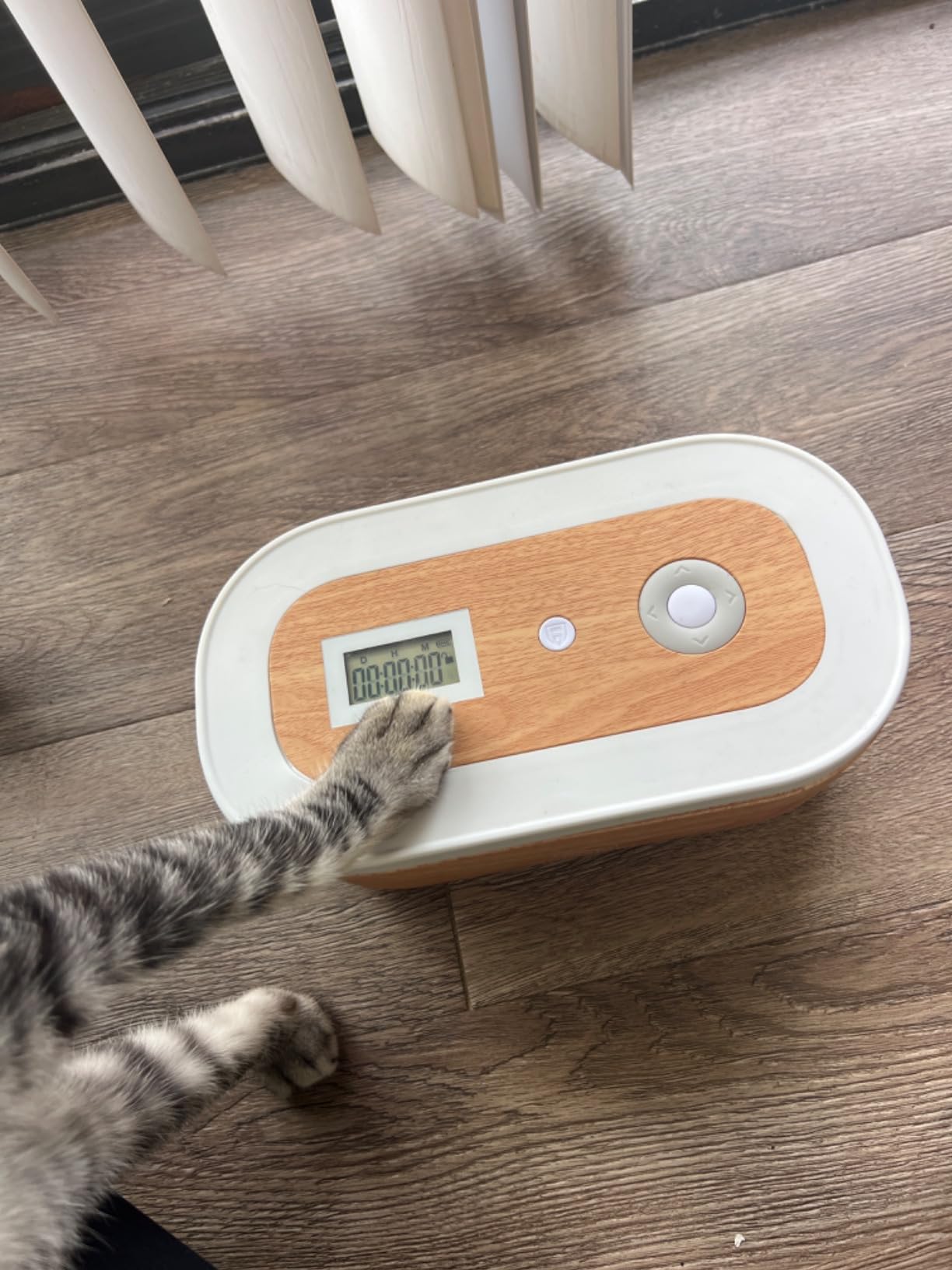
The Timed Lock Box by Mindsight can help create a physical boundary around your phone during weekend reset windows.
Instead of relying on willpower, you place your phone inside, set the timer, and let the box hold the boundary for you.
This is especially helpful on weekends because phone checking can become automatic. You may not even realize how often you reach for your device until it is no longer right beside you.
The Timed Lock Box can be useful for:
- Phone-free mornings
- Family meals
- Weekend cleaning blocks
- Reading time
- Creative projects
- Screen-free evenings
- Date nights
- Outdoor time
- Sunday reset routines
- Bedtime wind-down
A physical boundary makes the habit less automatic.
When your phone is locked away, you do not have to keep deciding not to check it. That mental negotiation disappears for a while, which can make the reset feel easier.
You are not removing your phone forever.
You are creating protected windows where your attention belongs to your life, not your screen.
Timed Lock Box
A simple physical boundary that helps create phone-free weekends, reduce automatic scrolling, and protect screen-free time.
Explore the Timed Lock BoxFinal Thoughts
A phone-free weekend does not have to be extreme.
It can begin with one meal, one morning, one walk, or one quiet hour where your phone is not invited to sit in the front row of your attention.
You can still be connected. You can still check important messages. You can still use your phone when you need it.
The difference is intention.
Instead of letting your phone decide the shape of your weekend, you choose when it gets your attention.
Start small.
Pick one phone-free window this weekend. Put your phone away. Choose something simple to do instead. Let your time feel like it belongs to you again.
Sometimes the best weekend plan is not adding more activities.
It is removing the tiny screen that keeps stealing the quiet ones.