The Calm Desk Reset: How to Make Work Feel Less Overwhelming
When work feels overwhelming, your desk may need a reset. A busy workspace can make your brain feel crowded before you even start, especially when it is full of tabs, notifications, papers, tasks, and little reminders asking for attention.
A calm desk reset can help reduce mental clutter, calm your body, and create a workspace that supports focus instead of adding more pressure to your day.
Table of Contents
Why Work Can Feel Overwhelming So Quickly
Work can become overwhelming before the day even feels fully started.
You sit down with one task in mind. Then an email comes in. A message needs a reply. A meeting reminder appears. Your phone buzzes. Your tabs multiply. A small task turns into three smaller tasks wearing tiny office shoes.
Suddenly, your brain is trying to hold too many things at once.
This is why overwhelm can build so quickly at a desk. It is not always because one task is impossible. Often, it is because your attention is being pulled in too many directions.
You may feel:
- Scattered
- Tense
- Behind
- Distracted
- Mentally full
- Restless
- Unsure what to do first
- Annoyed by simple tasks
- Unable to focus deeply
When your workspace is full of visual reminders, digital alerts, and unfinished loops, your brain has to keep sorting through all of it.
A calm desk reset helps interrupt that pattern.
It gives your mind and body a clearer place to begin again.
How Your Desk Adds to Mental Clutter
Your desk may seem harmless, but it sends constant signals to your brain.
A notebook reminds you of one project. A sticky note reminds you of another. A phone invites you to check messages. A pile of papers asks to be dealt with. Open tabs keep waving from the screen like little digital flags.
Even if you are not actively thinking about every item, your brain is still noticing.
That creates mental clutter.
Mental clutter makes it harder to focus because your attention has too many possible landing places. Instead of staying with one task, your mind keeps scanning the room, the screen, the list, and the next thing.
Your desk can become overwhelming when it has:
- Too many visible tasks
- Too many open tabs
- A phone within reach
- Unfinished notes everywhere
- Random objects crowding the surface
- Bright or harsh lighting
- No clear focus point
- No calming sensory cue
A calmer desk does not need to be empty. It just needs to help your brain know what matters right now.
Why Your Body Needs Calm Before Focus
Focus is not only a mental skill. It is also connected to your nervous system.
When your body feels stressed, your brain becomes more reactive. You may switch tasks more often, check your phone more quickly, avoid harder work, or feel irritated by interruptions.
That is because stress pushes your system into alert mode.
In alert mode, your brain is scanning for what needs attention next. This can be useful in an emergency, but it is not ideal for deep work, writing, planning, studying, or creative thinking.
Before your mind can focus, your body often needs to feel safer and steadier.
A calm desk reset can help by creating small signals of stability:
- A clearer surface
- A slower breath
- A quieter environment
- A tactile outlet for restless hands
- A gentle sound in the background
- A visual cue that helps your eyes rest
These small cues tell your nervous system that it does not have to keep bracing.
When the body softens, focus becomes easier to access.
The Power of a Simple Desk Reset
A desk reset does not need to take long.
You do not need to reorganize your entire office, buy matching containers, label every cord, or become a minimalist monk with a laptop.
A simple reset can take five minutes.
The goal is to remove unnecessary noise from your workspace so your brain has fewer things to process.
Try this:
- Clear anything that does not belong to the task in front of you.
- Close tabs you do not need right now.
- Move your phone out of reach.
- Write down the one task you are returning to.
- Take three slow breaths.
- Add one calming cue to your space.
This kind of reset creates a small before-and-after moment.
- Before: your desk feels scattered.
- After: your desk has one clear direction.
That shift matters.
Sometimes your brain does not need a whole new productivity system. It needs a cleaner runway.
How to Clear Your Space Without Overthinking It
Clearing your desk can feel like another task, especially when you are already overwhelmed.
So keep it simple.
Use the “one task only” rule.
Ask yourself: What do I need for the next thing I am doing?
Keep those items visible. Move everything else out of the immediate workspace.
You can place extra items in a drawer, basket, tray, or even one neat pile to sort later. The goal is not to solve all clutter forever. The goal is to help your brain focus now.
Try this quick reset:
- Remove dishes, wrappers, and random items.
- Put papers in one stack.
- Close extra notebooks.
- Move your phone away.
- Keep only your current tools nearby.
- Wipe the surface if needed.
- Choose your next task.
Do not make the reset so big that it becomes its own mountain.
Let it be small enough to actually do.
Your desk is not auditioning for a magazine. It is helping your mind breathe.
Small Sensory Tools That Support Focus
Sensory tools can make a desk feel calmer without adding more digital noise.
This matters because most workspaces are screen-heavy. Your brain may already be tired from emails, tabs, calls, notifications, and constant switching.
A good sensory tool gives your nervous system something grounding without pulling your attention away.
Helpful sensory cues may include:
- Soft tactile feedback
- Gentle ambient sound
- Slow visual movement
- Warm lighting
- A clear surface
- A calming object nearby
- A screen-free reset tool
For people who feel restless, tactile tools can give the hands a healthy outlet. For people who feel tense or overstimulated, soft sound or gentle movement can help make the space feel less sharp.
The goal is not to distract yourself from work.
The goal is to support your body so your mind can stay present.
Using MindSculpt and Calming Cloud at Your Desk
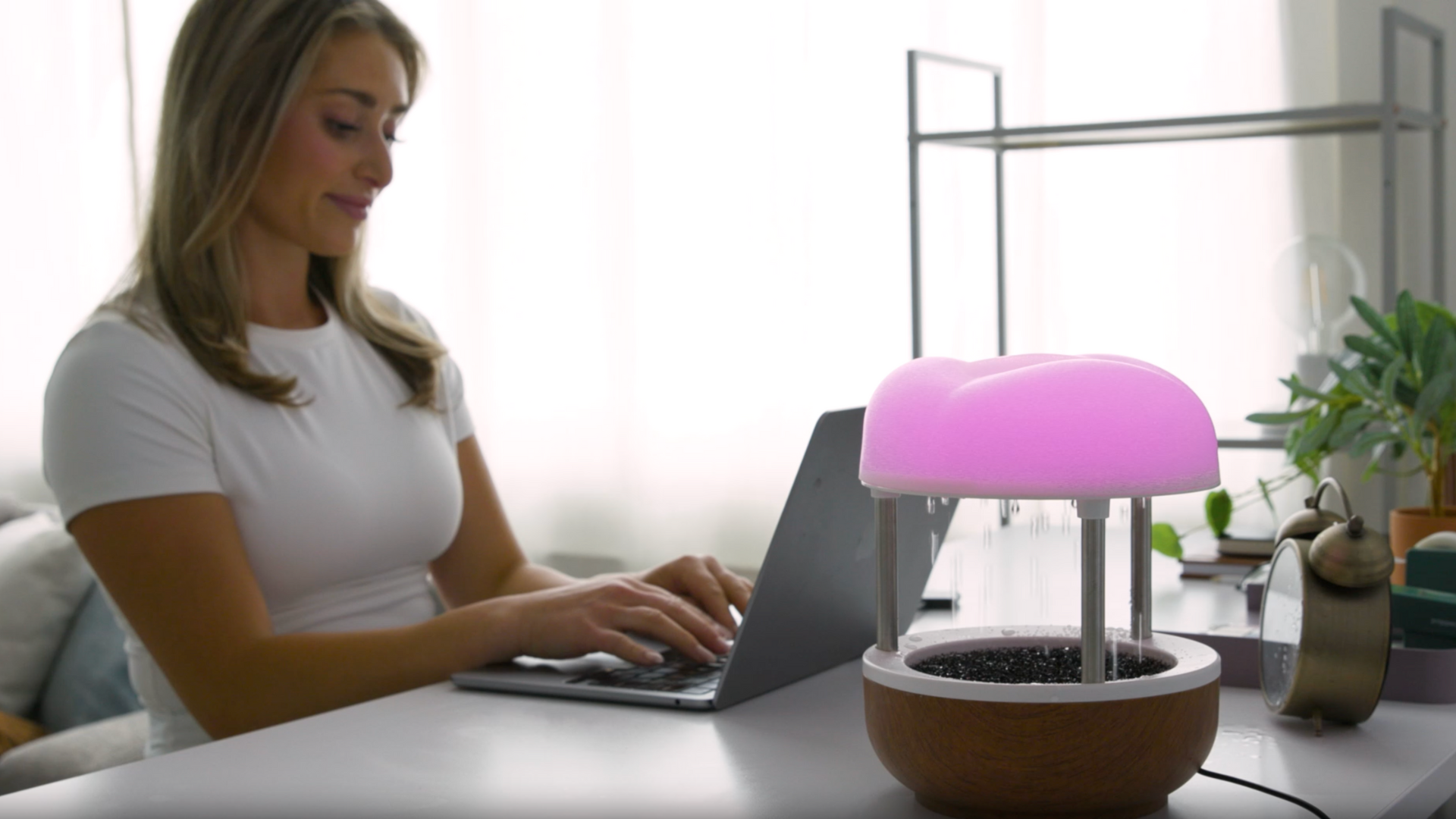
MindSculpt and the Calming Cloud Tabletop Fountain by Mindsight can both support a calmer desk reset in different ways.
MindSculpt is a tactile focus and stress relief tool designed to give restless hands something grounding to do. It combines calming putty with guided mindfulness exercises, making it useful for focus, stress relief, and screen-free sensory support.
You can use MindSculpt:
- During meetings
- While brainstorming
- During study sessions
- Between tasks
- When stress makes you want to scroll
- When your hands feel restless
- During long work blocks
The Calming Cloud Tabletop Fountain adds soft water movement, gentle rain-like sound, and calming light to your workspace. It can help soften a desk area and make the environment feel less sharp during busy workdays.
You can use the Calming Cloud:
- On a work desk
- In a home office
- In a reading corner
- During planning sessions
- During creative work
- During screen breaks
- As a calming background cue
Together, these tools can help create a desk environment that feels less reactive and more supportive.
MindSculpt gives restless energy somewhere to go. Calming Cloud softens the space around you with movement and sound.
MindSculpt
A tactile focus and stress relief tool that gives restless hands a quiet, grounding outlet during work, study, meetings, and stressful moments.
Explore MindSculptCalming Cloud Tabletop Fountain
A calming tabletop fountain that adds soft water movement, gentle ambient sound, and a peaceful sensory cue to your desk or home office.
Explore the Calming CloudFinal Thoughts
When work feels overwhelming, the answer is not always to push harder.
Sometimes your brain needs fewer signals. Your body needs a calmer rhythm. Your desk needs one clear direction instead of twelve competing reminders.
A calm desk reset can help you return to your work with more steadiness.
Clear one surface. Move your phone. Close extra tabs. Take a breath. Give your hands something grounding. Add one calming cue.
Small changes can shift the feeling of an entire work block.
Your desk does not have to be perfect.
It just needs to become a place where your attention can land.