Table of Contents
- Introduction: Why Stress Feels So Overwhelming
- How Your Breath Affects Your Nervous System
- Why Breathing Patterns Change During Stress
- The Power of Intentional Breathing
- Three Simple Breath Techniques to Calm Anxiety
- Why Visual Breath Guides Make It Easier
- Spotlight: The Breathing Buddha
- Conclusion: Your Breath Is Always Available
Introduction: Why Stress Feels So Overwhelming
Stress can arrive suddenly.
A demanding workday, a difficult conversation, an overflowing to-do list — these situations can quickly trigger tension in your body. Your heart rate rises, your shoulders tighten, and your thoughts begin to race.
Many people try to calm down by distracting themselves with their phones, music, or social media. While these methods can temporarily shift attention, they often do little to address what’s actually happening inside the body.
Your nervous system is responding to stress.
One of the most powerful ways to calm that response is through something you already do thousands of times every day: breathing.
How Your Breath Affects Your Nervous System
Your breath is closely connected to your nervous system.
When you feel stressed, your body activates the sympathetic nervous system, often called the “fight or flight” response. This system prepares your body for action by increasing heart rate and sending oxygen to your muscles.
One of the first changes that happens is in your breathing pattern.
Breaths become shorter, faster, and shallower.
While this response can be helpful in true emergencies, modern stress rarely requires physical action. Instead, the body remains stuck in a state of alertness.
Slow, intentional breathing can activate the opposite system: the parasympathetic nervous system, also known as “rest and digest.”
This shift signals to your body that it is safe to relax.
Why Breathing Patterns Change During Stress
Most people don’t notice how dramatically their breathing changes during stressful moments.
Instead of breathing deeply into the diaphragm, stress causes chest breathing — quick, shallow breaths that keep the body in an activated state.
This pattern can reinforce feelings of anxiety.
When your breathing is shallow:
- Your heart rate stays elevated
- Your muscles remain tense
- Your brain interprets the signals as ongoing stress
By consciously slowing your breath, you interrupt this cycle and allow the nervous system to shift back toward calm.
The Power of Intentional Breathing
Intentional breathing is one of the fastest ways to influence how your body feels.
Unlike many relaxation techniques that require time, equipment, or guidance, breathwork works almost immediately.
Within just a few slow breaths, the body begins to respond.
- Heart rate gradually decreases
- Muscle tension softens
- Thoughts become less frantic
- Your sense of control returns
Because breathing is always accessible, it becomes a powerful tool for managing stress in daily life.
Three Simple Breath Techniques to Calm Anxiety
You don’t need complicated methods to experience the benefits of breathwork. Even simple patterns can be highly effective.
Box Breathing
Box breathing is widely used by athletes, meditators, and even military professionals to regulate stress.
- Inhale slowly for four seconds
- Hold your breath for four seconds
- Exhale slowly for four seconds
- Pause for four seconds
Repeat the cycle several times to create a steady breathing rhythm.
4–7–8 Breathing
This breathing pattern emphasizes a longer exhale, which helps signal relaxation to the nervous system.
- Inhale for four seconds
- Hold for seven seconds
- Exhale slowly for eight seconds
The extended exhale helps slow heart rate and release tension.
Deep Belly Breathing
Place one hand on your chest and one on your stomach.
As you inhale, focus on expanding your belly rather than lifting your chest. This engages the diaphragm, which naturally supports deeper relaxation.
Slow belly breathing helps reduce the physical symptoms of anxiety.
Why Visual Breath Guides Make It Easier
Many people struggle with breathwork for a simple reason: it can be difficult to keep track of timing while trying to relax.
Counting breaths in your head may feel distracting. Watching a timer can feel clinical rather than calming.
Visual breathing guides solve this problem by providing a natural rhythm to follow.
Instead of thinking about numbers or instructions, you simply match your breath to a visual cue.
This makes breathing exercises easier to follow and more enjoyable to practice.
Spotlight: The Breathing Buddha
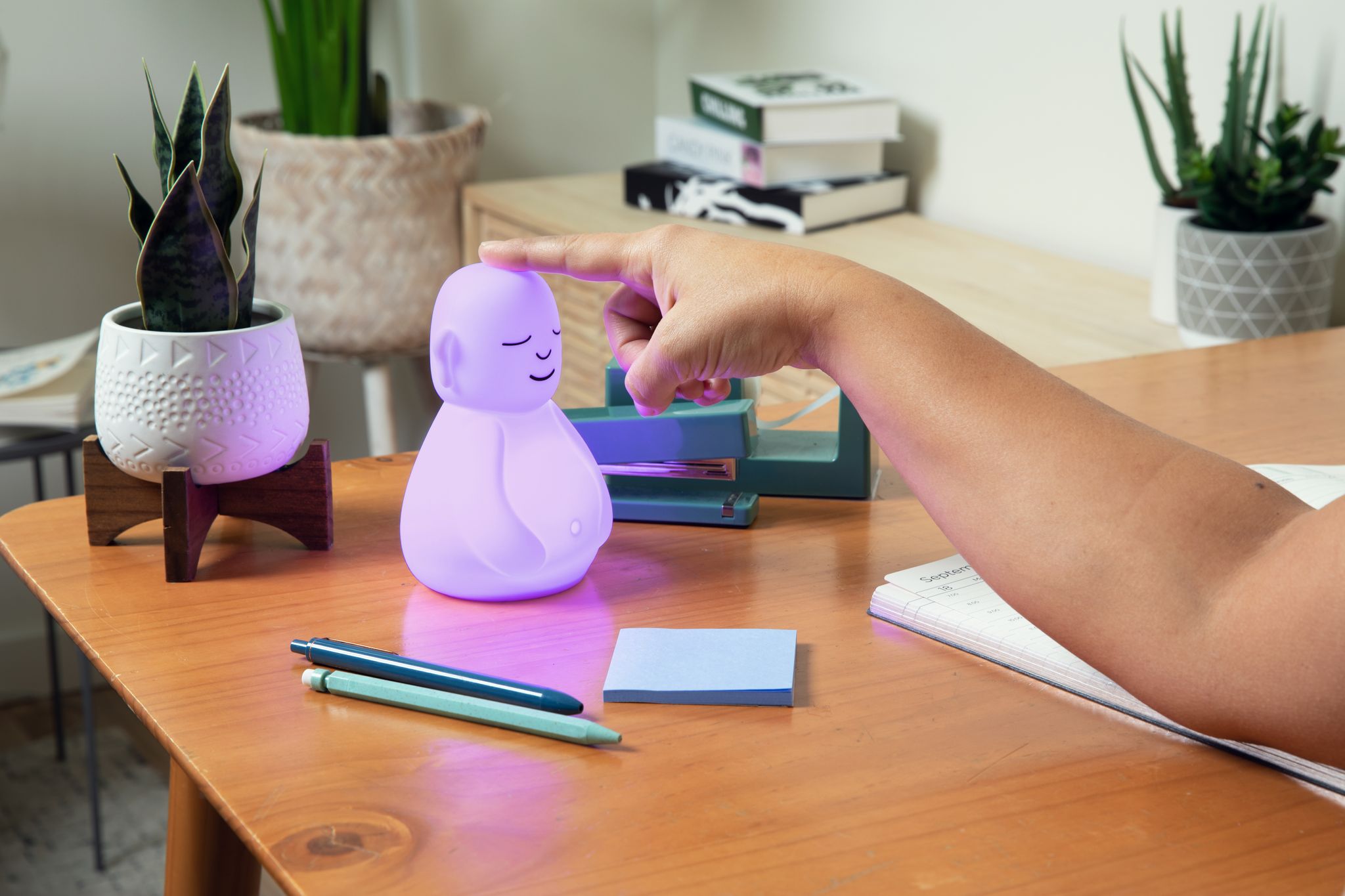
The Breathing Buddha by Mindsight is designed to help people practice breathwork through gentle visual guidance.
Rather than relying on apps or timers, the Breathing Buddha provides a visual rhythm that guides your inhale and exhale cycles.
This allows you to focus on breathing without needing to count or monitor the clock.
Benefits include:
- Easier breathwork for beginners
- A calming visual focus during stressful moments
- A screen-free alternative to breathing apps
- A gentle reminder to slow down throughout the day
Whether used during meditation, work breaks, or moments of anxiety, the Breathing Buddha helps make breathwork simple and accessible.
Explore the Breathing Buddha here:
https://mindsightnow.com/products/breathing-buddha
Conclusion: Your Breath Is Always Available
Stress is an unavoidable part of life, but the way your body responds to it can change.
Breathwork offers a powerful way to shift your nervous system from tension to calm within minutes.
By practicing simple breathing techniques and using supportive tools like the Breathing Buddha, you can create moments of calm even during the busiest days.
Your breath is always with you.
Learning how to use it intentionally can become one of the most valuable tools for managing stress and protecting your mental wellbeing.
Learn more about the Breathing Buddha:
https://mindsightnow.com/products/breathing-buddha