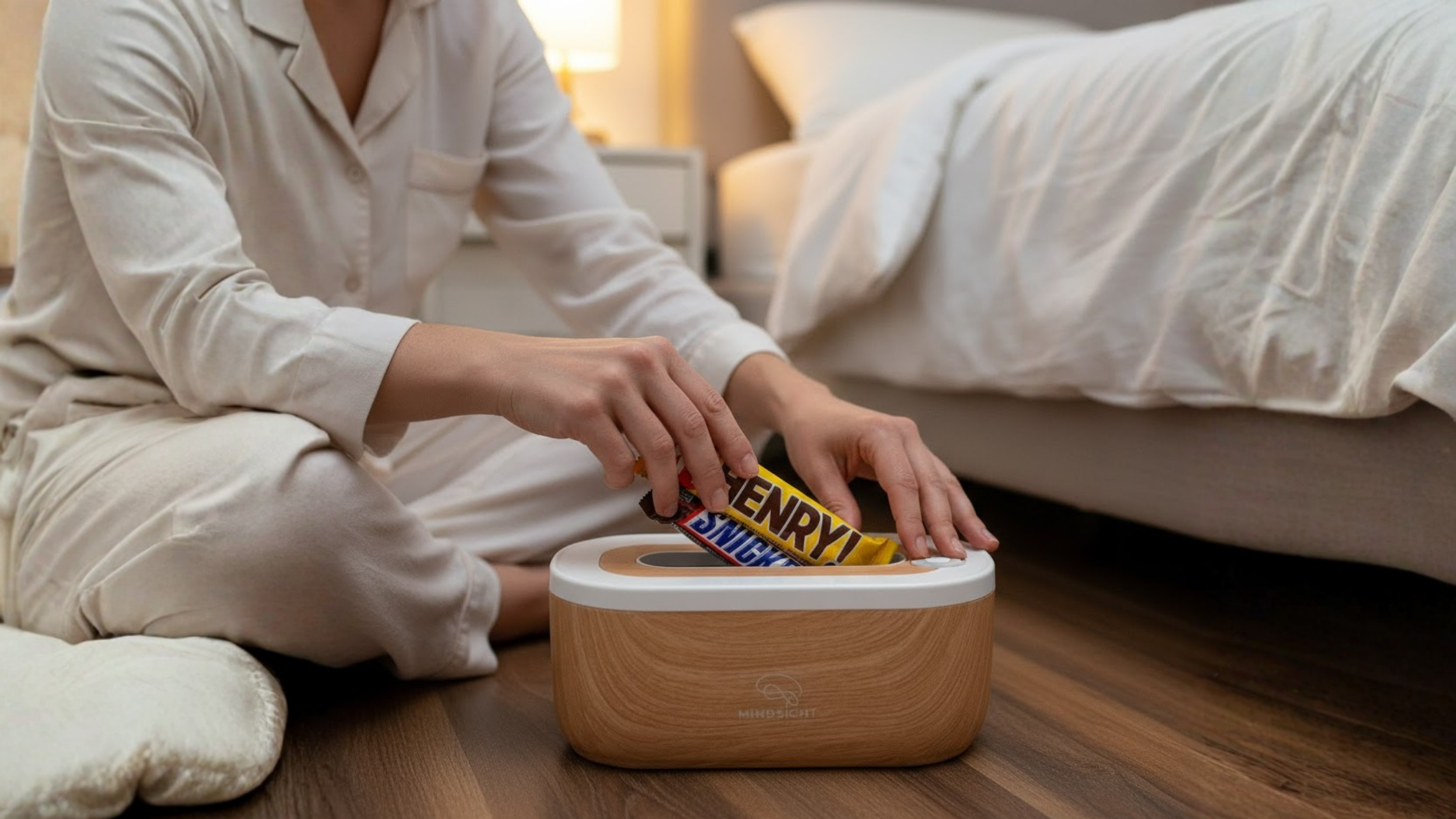
Late-night snacking is one of the most common habits that derails healthy routines. You finish dinner, wind down, and suddenly — the cravings hit. A handful of chips, a few cookies, or a late-night fridge raid becomes a nightly cycle that feels impossible to break.
But here’s the truth: it’s not about having more willpower — it’s about creating the right environment. A simple tool like the Mindsight Timed Lock Box can introduce the pause your brain needs to break the habit for good.
Why Late-Night Snacking Happens
Late-night cravings aren’t usually about hunger — they’re about comfort, stimulation, emotions, or habit. Studies show nighttime eating is often linked to stress, fatigue, boredom, or a desire to “reward” yourself at the end of the day.
At night, your self-control is naturally lower because your brain has spent all day making decisions. This makes high-calorie, high-reward foods even more tempting. To stop late-night snacking, you don’t need to “be stronger” — you need a strategy that supports your brain, not fights it.
The Science Behind Cravings & Emotional Eating
Cravings are powered by dopamine — the “reward” chemical your brain releases when you anticipate something pleasurable. Over time, your mind links nighttime relaxation with food rewards, forming a habit loop:
Cue → Craving → Response → Reward
Emotional eating works the same way. When you’re stressed, lonely, tired, or overstimulated, food becomes a quick “escape button.” But the relief is temporary — and often followed by frustration or guilt.
Breaking the loop requires interrupting the automatic response. The key is to introduce a pause between the craving and the action, giving your brain time to choose differently.
Why Willpower Alone Doesn’t Work
Trying to rely on willpower at night is like trying to run a marathon on an empty tank. Willpower is a limited resource — it drains throughout the day and becomes weakest at night.
This is why “just don’t eat it” rarely works. Your brain is tired, stressed, and looking for something comforting. Instead of fighting cravings with motivation (which fades), you need a tool that removes the option altogether and makes nighttime decisions easier.
How a Timed Lock Box Helps You Break the Cycle
A timed lock box, like the Mindsight Timed Lock Box , is one of the simplest but most effective tools for changing eating habits. It locks away snacks for a set amount of time, creating an automatic pause between your craving and your action.
Here’s why it works:
- Delays instant gratification: Cravings normally fade within 15–30 minutes — long enough for the urge to pass.
- Reduces decision fatigue: If snacks are locked away, there's nothing to debate — making healthy choices easier.
- Supports habit change: Repeating this pattern retrains your brain to expect a different reward at night.
- Encourages mindful eating: You eat intentionally, not automatically.
This method uses a psychological principle called stimulus control — changing your environment to support the behavior you want.
Step-by-Step: How to Use a Lock Box for Healthy Eating Habits
- Identify your triggers. Is it stress? boredom? scrolling in bed?
- Set up your lock box. After dinner, place all tempting snacks inside.
- Choose your lock time. Start with 8–10 hours (e.g., 8 PM to 6 AM).
- Plan your alternatives. Herbal tea, journaling, stretching, reading, or listening to calming music.
- Reflect after a week. Track your urges — most people notice fewer cravings within 10–14 days.
This system doesn’t rely on motivation — it relies on structure. And structure always beats willpower.
Want to try it? Explore the Mindsight Timed Lock Box and experience how a simple tool can transform your eating habits.
Other Strategies That Support Better Craving Control
A timed lock box is powerful on its own — but it becomes even more effective when combined with mindful habits:
- Practice mindful eating: Slow down and truly taste your meals.
- Stay hydrated: Thirst often disguises itself as hunger.
- Establish a bedtime routine: Most snacking happens because people stay up too late.
- Journal your emotions: Increase self-awareness before reaching for food.
- Eat balanced meals: Protein + fiber reduces nighttime cravings.
Real-Life Example: From Mindless Eating to Mindful Control
Sarah, a 32-year-old designer, used to snack every night while scrolling on her phone. She’d wake up sluggish and frustrated, convinced she “lacked discipline.” Everything changed when she introduced the Mindsight Timed Lock Box .
By locking away her snacks after dinner, Sarah created a physical and psychological barrier. She replaced her usual snacking time with stretching and journaling. Within a month, she reported:
- Better sleep
- Fewer cravings
- Higher energy levels
- Greater confidence in her self-control
Her story reflects a powerful truth: lasting change doesn’t come from willpower — it comes from structure and self-awareness.
Build a Healthier Relationship With Food
Late-night snacking doesn’t have to be a lifelong struggle. By combining mindfulness, self-awareness, and behavioral tools like the Mindsight Timed Lock Box , you can create lasting change in your eating patterns.
It’s not about restriction — it’s about empowerment. You’re teaching your brain that you choose your habits, not the other way around.
Start today: Try the Mindsight Timed Lock Box and take the first step toward healthier, more mindful evenings — one choice at a time.