Best Mindfulness Tools for Beginners
Starting a mindfulness practice can sound simple from the outside. Sit quietly, breathe, notice your thoughts, and stay present. Easy enough, right?
But when you are new to mindfulness, sitting still can sometimes make your mind feel even louder. Thoughts move quickly. Your body may feel restless. You may wonder if you are doing it wrong.
The good news is that mindfulness is not about emptying your mind or forcing yourself into perfect calm. It is about learning to notice the present moment with more awareness, patience, and kindness. The right tools can make that process feel much easier, especially in the beginning.
Table of Contents
- Why Mindfulness Feels Hard at First
- What Mindfulness Really Means
- Why Tools Make Mindfulness Easier
- What to Look for in Beginner-Friendly Tools
- Types of Mindfulness Tools That Actually Help
- Why Physical Tools Work Better Than Apps
- Simple Tools to Start Your Practice
- How to Build a Simple Mindfulness Routine
- Conclusion: Start Small and Stay Consistent
Why Mindfulness Feels Hard at First
Mindfulness is often described in very simple language. Focus on your breath. Stay present. Let your thoughts pass. For beginners, though, that simplicity can feel surprisingly difficult.
When you finally sit quietly, your mind may start listing everything you forgot to do. You may replay conversations, plan tomorrow, worry about your schedule, or feel impatient because you are not instantly relaxed.
That does not mean mindfulness is not working. It usually means you are becoming more aware of how active your mind already is.
Mindfulness is not about stopping your thoughts. It is about learning how to observe them without getting pulled into every single one. Over time, this helps you respond to life with more steadiness instead of reacting automatically.
What Mindfulness Really Means
Mindfulness is the practice of paying attention to the present moment. That can include your breath, your body, your thoughts, your emotions, or the environment around you.
Instead of judging what you notice, mindfulness invites you to simply observe it. You might notice tension in your shoulders, a racing thought, the sound of water, the feeling of an object in your hand, or the rhythm of your breathing.
This kind of awareness creates space. In that space, you can pause before reacting. You can notice what you need. You can return to your body instead of being swept away by stress, distraction, or mental clutter.
Mindfulness is not something you master in one sitting. It is a skill you build through small, consistent moments of attention.
Why Tools Make Mindfulness Easier
For many beginners, the hardest part of mindfulness is knowing where to place your attention. Without a clear anchor, the mind can wander quickly.
Mindfulness tools give your attention somewhere to rest. A breathing guide can help you follow a steady rhythm. A tactile object can help you focus through touch. A calming visual or sound element can help your nervous system settle without needing much effort from you.
These tools do not do the practice for you, but they make the practice easier to begin. They create structure, reduce frustration, and help you return to the present moment when your thoughts drift away.
What to Look for in Beginner-Friendly Tools
Beginner-friendly mindfulness tools should feel simple, approachable, and easy to use. They should not require complicated instructions or make the practice feel like another task on your to-do list.
The best tools usually have a few things in common:
- They encourage focus without adding distraction.
- They support calm through gentle sensory input.
- They can be used without relying on a screen.
- They are easy to keep nearby and use consistently.
- They help you return to the present moment in a natural way.
The goal is not to collect more things. The goal is to choose simple supports that make mindfulness feel more accessible in everyday life.
Types of Mindfulness Tools That Actually Help
Different mindfulness tools support different types of attention. Some help you breathe more slowly. Some help release restless energy. Others create a calmer environment so your mind has less stimulation to fight against.
Breathing Guides
Breathing guides are helpful because they give your breath a rhythm to follow. Instead of counting in your head or trying to remember a breathing pattern, you can simply follow a visual cue.
This can make breathwork feel less intimidating, especially if you are just starting out.
Tactile Tools
Tactile tools are objects you can hold, press, stretch, or move with your hands. They are especially useful when sitting still feels difficult.
Touch gives your attention a physical anchor. It can help bring you out of racing thoughts and back into the present moment.
Sensory Environment Tools
Your environment affects your ability to relax. Gentle movement, soft sound, and calming visuals can make a room feel more supportive for mindfulness.
These tools are helpful because they do not demand your attention in a loud way. They simply create a calmer atmosphere for your practice.
Why Physical Tools Work Better Than Apps
Many people start mindfulness with apps, and apps can be useful. They offer guided meditations, timers, reminders, and structured programs.
But apps also live on the same device that holds your messages, emails, social media, and notifications. For some beginners, opening a mindfulness app can quickly turn into checking a text, scrolling a feed, or getting pulled into another digital task.
Physical tools offer a different experience. They engage your senses without adding another screen. They help you practice mindfulness in a quieter, simpler way.
For beginners, that simplicity can make a big difference.
Simple Tools to Start Your Practice
The best mindfulness tool is the one you will actually use. You do not need a complicated setup. You just need something that helps you pause, focus, and come back to the present moment.
Breathing Buddha
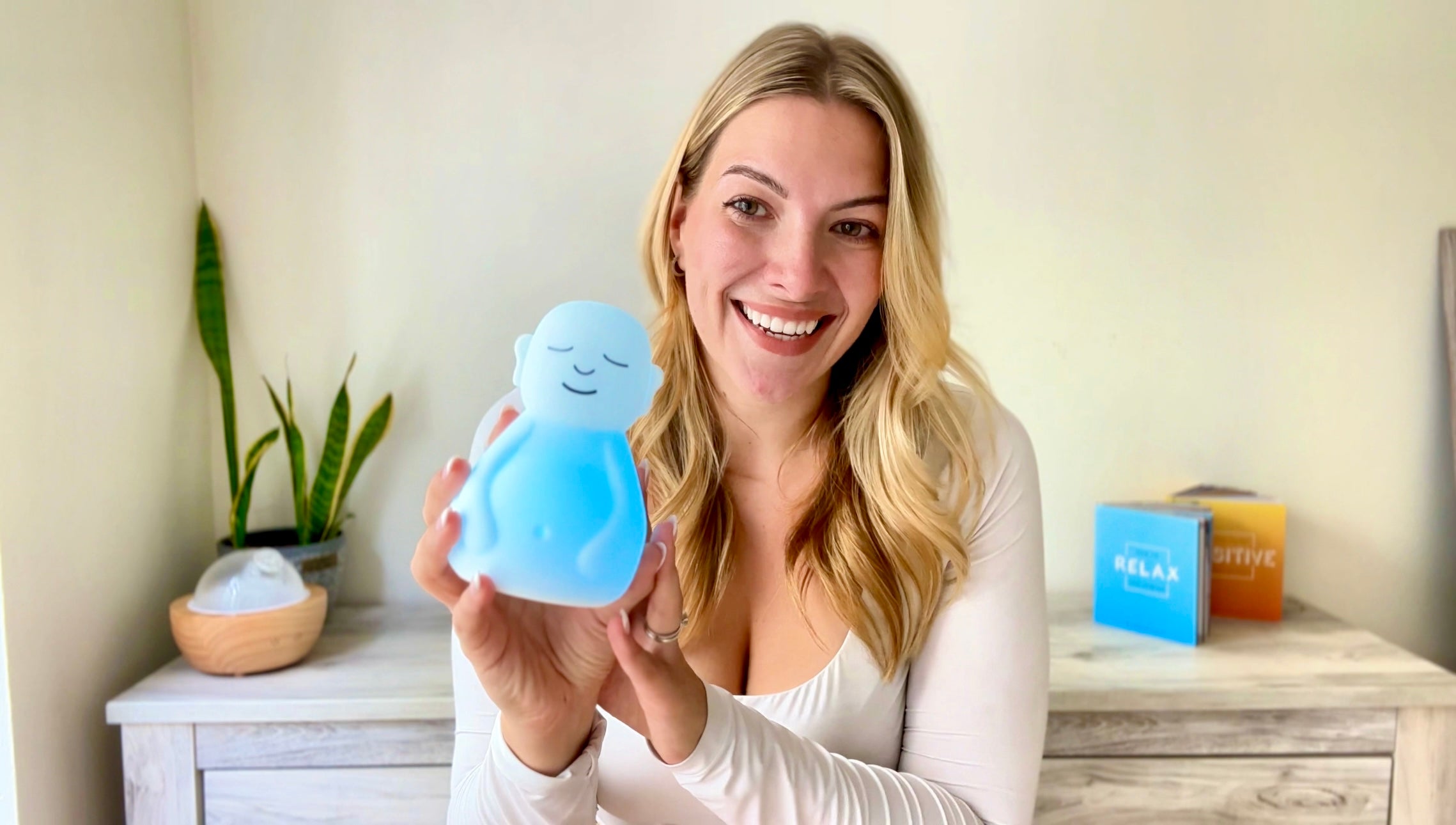
The Breathing Buddha by Mindsight helps guide your breath through a simple visual rhythm. Instead of counting or thinking through each inhale and exhale, you can follow the light pattern and let your breathing slow down naturally.
This makes it a helpful option for beginners who want to practice breathwork but prefer something visual and easy to follow.
Explore the Breathing BuddhaMindful Putty
Mindful Putty provides a tactile way to stay present. Using your hands can help anchor your attention, release nervous energy, and make stillness feel less uncomfortable.
This can be especially helpful during work breaks, quiet moments, or times when your mind feels busy and your body needs something grounding.
Explore Mindful PuttyCalming Cloud Tabletop Fountain
The Calming Cloud Tabletop Fountain introduces gentle sound and visual flow into your space. The steady movement of water can create a peaceful environment that supports mindfulness without requiring effort.
It can work well in a bedroom, desk area, reading corner, or any place where you want a softer atmosphere for slowing down.
Explore the Calming CloudKinetic Wall Art
Kinetic Wall Art offers slow, continuous movement that can serve as a visual anchor. Watching gentle motion can help your attention settle without the overstimulation that often comes from screens.
It is a simple way to add a calming focal point to a room, especially for moments when you want to pause and reset.
Explore Kinetic Wall ArtHow to Build a Simple Mindfulness Routine
Mindfulness does not need to take a long time. In the beginning, a short routine is often better than an ambitious one. One to five minutes a day is enough to start building the habit.
Choose one tool and use it at the same time each day. You might follow a breathing rhythm before work, use a tactile tool during a stressful moment, or sit near a calming visual element in the evening.
A simple beginner routine could look like this:
- Choose one quiet moment in your day.
- Set your phone aside or silence notifications.
- Focus on one tool, sound, movement, or sensation.
- Notice your breath and body.
- When your mind wanders, gently return your attention.
- Repeat daily, even if only for a few minutes.
Consistency matters more than duration. The practice becomes easier when it feels small enough to repeat.
Conclusion: Start Small and Stay Consistent
Mindfulness is not about doing it perfectly. It is about showing up consistently and learning how to return to the present moment again and again.
Simple tools can make that easier. They give your attention a place to land, reduce digital distraction, and help your body and mind settle into the practice.
Whether you begin with a breathing guide, a tactile object, a calming fountain, or a slow-moving visual anchor, the most important step is simply starting.
Start small. Keep it simple. Let your mindfulness practice grow one quiet moment at a time.