A breathing timer is one of the simplest yet most effective tools for stress relief. Whether you’re new to mindfulness or want a quick reset during your day, guided breathwork helps your nervous system settle, clears mental fog, and brings your body back into balance — often within just a few slow breaths.
This guide walks you through how to use a breathing timer effectively, why it works, and how tools like the Mindsight Breathing Buddha can deepen your daily practice without relying on your phone or a screen.
Table of Contents
- What Is a Breathing Timer?
- Why Breathwork Works
- How to Use a Breathing Timer
- Most Popular Breathing Patterns
- Why Visual Breath Timers Are So Effective
- The Next Step: Mindsight Breathing Buddha
- Real-Life Example
- Final Thoughts
What Is a Breathing Timer?
A breathing timer is a simple visual or audio tool that guides your inhaling and exhaling. Instead of counting in your head or guessing the pace, the timer provides slow animations or signals that keep your breathing steady and consistent.
This makes breathwork feel:
- Easier to follow
- More relaxing
- More effective over time
- More accessible for beginners
Most importantly, it reduces mental effort, so your attention stays on your body rather than on counting.
Why Breathwork Works
Breathing is one of the fastest ways to shift your nervous system from stress mode into calm mode. When you slow your breath and make it rhythmic, your body receives a clear signal that you are safe, supported, and no longer in “fight-or-flight.”
Slow, steady breathing can support:
- Reduced anxiety
- Lower heart rate
- Less muscle tension
- Improved focus
- Stronger emotional regulation
- A quieter mind and less mental clutter
Each breath becomes an anchor, gently pulling you out of overwhelm and back into the present moment.
How to Use a Breathing Timer
Using a breathing timer is simple, and you don’t need a long session to feel the benefits. Even one focused minute can make a noticeable difference.
- Sit comfortably with your feet grounded and shoulders relaxed
- Open your breathing timer (visual or audio)
- Inhale as the guide expands
- Exhale as it contracts
- Repeat for 1–5 minutes
A breathing timer can be used any time your mind feels loud or your body feels tense:
- Before a stressful task or meeting
- During a work break to reset focus
- After waking up to start your day calmly
- Before bed to support sleep
- Whenever you feel overwhelmed or emotionally “flooded”
Most Popular Breathing Patterns
A good breathing timer makes these common patterns easier because you can follow the rhythm without constantly counting.
Box Breathing (4–4–4–4)
- Inhale for 4
- Hold for 4
- Exhale for 4
- Hold for 4
4–7–8 Breathing
- Inhale for 4
- Hold for 7
- Exhale for 8
This pattern is often used in evening routines because it helps the body shift toward rest.
Coherent Breathing (5–5)
- Inhale for 5
- Exhale for 5
This gentle rhythm supports nervous system regulation and is easy to repeat.
Extended Exhale (4–6)
- Inhale for 4
- Exhale for 6
This pattern is especially helpful when you feel anxious, because a longer exhale often signals calm to the body.
Why Visual Breath Timers Are So Effective
Visual breathing timers often feel more soothing than mental counting because they lower cognitive load. When you stop “thinking your way through it,” you can relax into the rhythm more naturally, which makes the practice feel calming instead of effortful.
Visual timers help because they:
- Reduce mental effort and overthinking
- Lower thought activity and rumination
- Support relaxation with a steady rhythm
- Create a meditative pace that is easy to follow
- Help beginners stay consistent without guessing timing
The Next Step: Mindsight Breathing Buddha
A digital breathing timer is an excellent way to start, but a physical breathwork tool can make the practice feel deeper, easier, and more consistent because it removes screens completely.
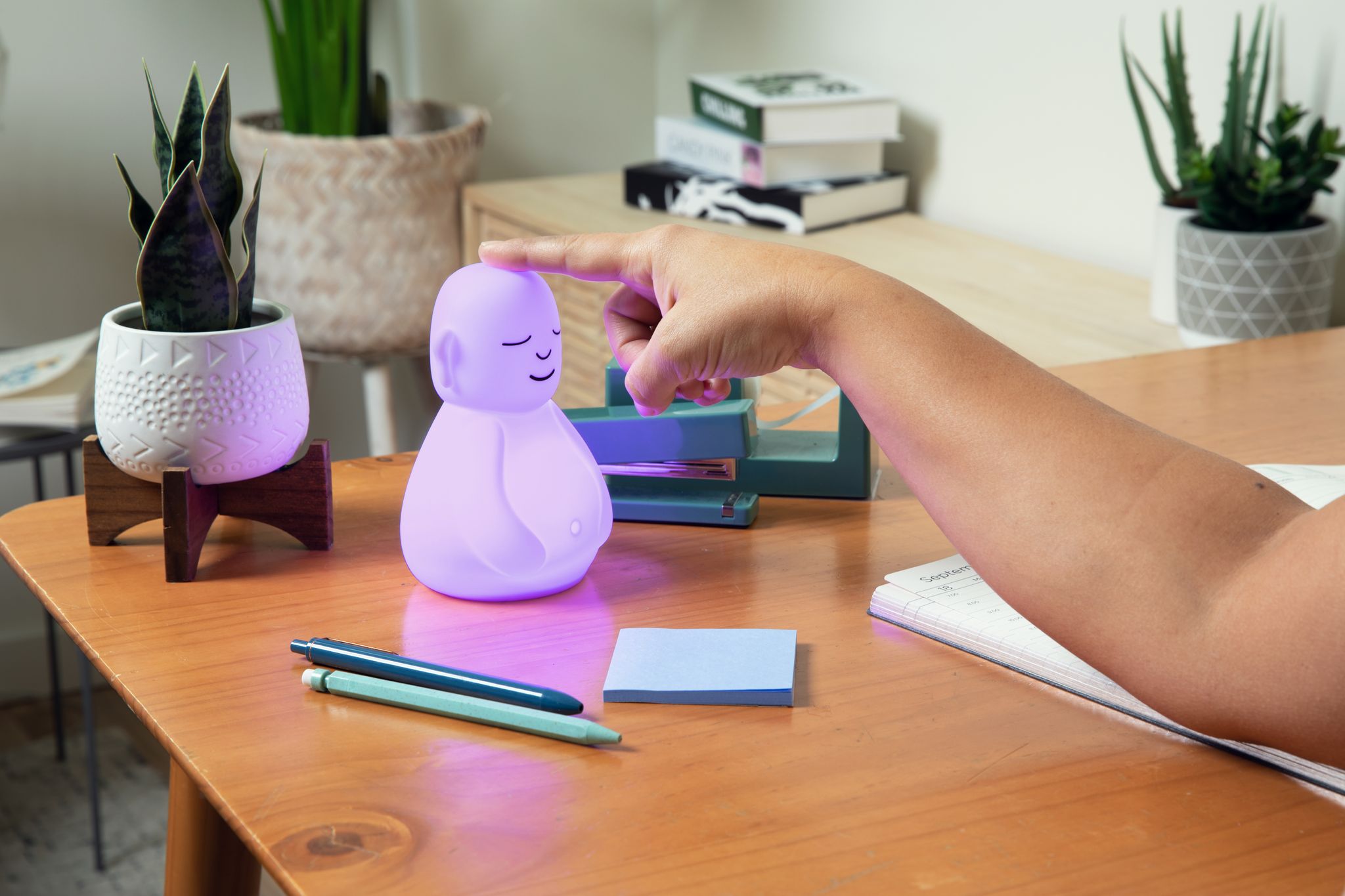
The Mindsight Breathing Buddha offers a screen-free breathing rhythm through a soft glow that expands and contracts, creating an intuitive pace you can follow without opening an app or staring at your phone.
Many people love it because it supports:
- A calming light rhythm that guides slow breathing
- A tactile, grounding presence on your desk or bedside
- Screen-free breathwork without notifications or distractions
- A gentle visual cue that supports anxiety relief
- An easy daily ritual that feels comforting and repeatable
If breathwork is becoming part of your routine, a physical tool can make it more intuitive and meaningful — especially during mornings, evenings, or stress resets in the middle of the day.
Explore the Mindsight Breathing Buddha here
Real-Life Example
Emma, a 25-year-old writer, struggled with afternoon anxiety and mental fog. She started using a breathing timer for just 90 seconds between tasks and noticed a difference faster than she expected. Her mind felt less cluttered, and she found it easier to return to work without spiraling into stress.
Over time, she wanted a fully screen-free experience, so she switched to the Mindsight Breathing Buddha. It became a small daily ritual that helped her start the day calmly and unwind more gently at night.
Her results were simple but meaningful:
- Less overwhelm during the afternoon
- Better focus between tasks
- More emotional stability
- Fewer impulse phone checks
Final Thoughts
A breathing timer is one of the simplest and most accessible tools for calm and emotional balance. Whether you use a free online timer or a dedicated physical tool like the Mindsight Breathing Buddha, breathwork can reset your nervous system in minutes and help you return to your day with more clarity.
Slow breaths.
Soft focus.
A calmer you — anytime you need it.