How to Create a Home Office That Helps You Focus Instead of Stressing You Out
Your home office should help you focus, not overwhelm you. But when your workspace is cluttered, overstimulating, or full of digital distractions, it can quietly make concentration feel harder.
A calmer home office does not need to be fancy. It simply needs fewer distractions, clearer boundaries, and sensory cues that help your mind settle into deep work.
Table of Contents
- Why Your Home Office Affects Your Focus
- Why Working From Home Can Feel Mentally Messy
- The Hidden Stress of a Cluttered Workspace
- How Visual Distractions Pull at Your Attention
- What a Focus-Friendly Home Office Needs
- Why Calming Sensory Cues Matter
- Using Kinetic Wall Art and Calming Cloud in Your Workspace
- Simple Home Office Reset Tips
- Final Thoughts
Why Your Home Office Affects Your Focus
Your home office is more than a desk and a chair.
It is the environment your brain steps into when it is time to think, plan, write, study, create, answer messages, solve problems, and make decisions.
That environment matters.
When your workspace feels cluttered, noisy, or visually busy, your brain has to work harder to filter distractions. Even if you are trying to focus, your surroundings may be quietly pulling your attention in different directions.
A home office should help your mind settle into work.
But for many people, the home office becomes a catch-all space: a desk for work, a place for bills, a charging station, a storage area, a snack zone, and sometimes a reminder of every unfinished task in the house.
No wonder focus feels harder.
A better home office does not need to be perfect. It simply needs to reduce unnecessary stimulation and create stronger cues for focused work.
Why Working From Home Can Feel Mentally Messy
Working from home sounds peaceful in theory.
No commute. More flexibility. Comfortable clothes. Your own space.
But the reality can feel mentally messy.
At home, work and personal life live close together. You may be answering emails while noticing laundry. You may be joining a meeting from the same room where you relax at night. You may be trying to focus while your phone, kitchen, family, pets, chores, and notifications all exist nearby.
Your brain has to sort through all of those signals.
That creates context switching.
Instead of being in one clear work mode, your mind keeps moving between roles: worker, parent, partner, roommate, homeowner, planner, cleaner, problem-solver, and person who just remembered they forgot to take something out of the freezer.
A focused home office helps create a boundary.
It tells your brain: this is the space where work happens.
That cue can make it easier to begin, stay focused, and finish with more clarity.
The Hidden Stress of a Cluttered Workspace
Clutter is not just about appearance. It can affect how your brain feels.
A messy desk can make your mind feel crowded before you even start working. Papers, cords, dishes, sticky notes, boxes, and random objects all create visual input.
Your brain has to process that input, even if you are not actively thinking about it.
This extra processing can contribute to:
- Mental fatigue
- Difficulty starting tasks
- More distraction
- A sense of overwhelm
- Less clear thinking
- More task switching
- Reduced motivation
A cluttered workspace can also keep unfinished tasks in your line of sight. Every visible item may whisper, “You still need to deal with me.”
That is not exactly the soundtrack of deep work.
Clearing your desk does not mean removing personality or making the room feel empty. It means making the space easier for your brain to enter.
How Visual Distractions Pull at Your Attention
Your brain naturally notices movement, contrast, light, and novelty.
This is useful in many situations, but it can make focus difficult when your workspace is full of visual distractions.
A phone lighting up. A screen moving in the background. A busy shelf. A pile of paperwork. A colorful mess of tabs on your monitor. Even a cluttered wall can create small attention pulls throughout the day.
Each distraction may be tiny, but together they can make concentration feel choppy.
A calmer visual environment helps your attention stay where you want it.
Try reducing visual noise by:
- Clearing the area directly around your laptop
- Keeping your phone out of sight
- Closing extra browser tabs
- Using baskets or trays for loose items
- Facing your desk toward a simpler view
- Removing work items after the day ends
- Choosing one calming visual anchor
Your goal is not a sterile workspace. Your goal is a room that gives your brain fewer little exits.
What a Focus-Friendly Home Office Needs
A focus-friendly home office is not about expensive furniture or a flawless aesthetic. It is about creating conditions that support attention.
A helpful workspace usually includes:
- A clear work surface
- Comfortable seating
- Good lighting
- Reduced phone access
- Fewer visible distractions
- A simple task system
- A calming visual cue
- A sensory element that softens the space
- A clear start-and-end work ritual
The most important part is intention.
Ask yourself: What do I want this space to help me do?
If the answer is focus, then your setup should protect focus.
That may mean keeping your phone away, clearing clutter, adding a calming object, or creating a small reset ritual before starting work.
A good home office should feel like it is helping you begin, not testing your patience before the first task.
Why Calming Sensory Cues Matter
Focus is not only mental. It is also physical.
Your nervous system responds to your environment all day. Harsh light, loud noise, clutter, and constant notifications can keep your body slightly activated. When your body feels tense, your mind often becomes more reactive.
Calming sensory cues can help balance that.
Gentle sound, slow movement, natural textures, soft lighting, and visual rhythm can make a workspace feel less sharp and more supportive.
These cues do not need to demand attention. In fact, the best ones usually work quietly in the background.
Helpful sensory cues for a home office may include:
- Soft ambient sound
- Flowing water
- Slow visual movement
- Natural light
- Plants or wood textures
- A clean desk surface
- A calm wall or shelf
- A short breathing pause between tasks
The goal is to create a workspace that helps your nervous system stay steady enough for focused work.
Using Kinetic Wall Art and Calming Cloud in Your Workspace
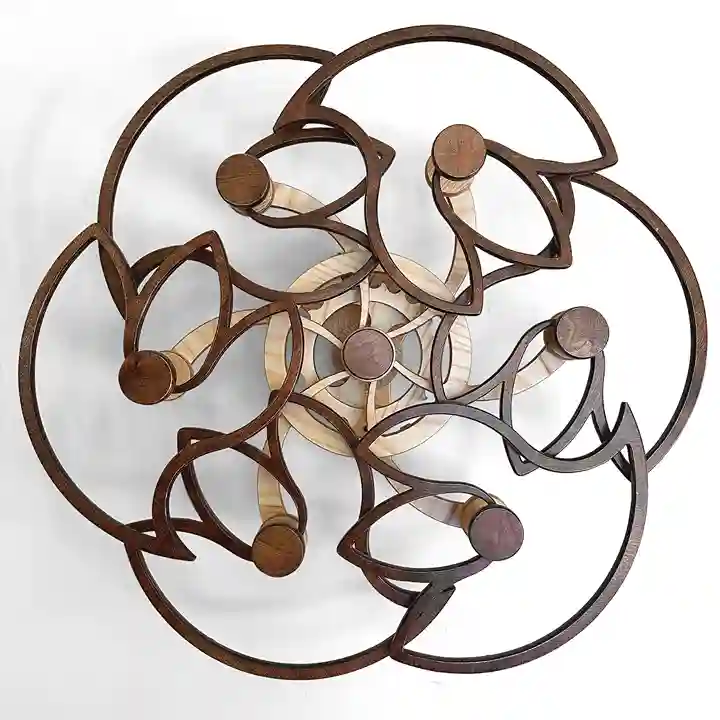
Kinetic Wall Art and the Calming Cloud Tabletop Fountain by Mindsight can support a calmer home office in different ways.
Kinetic Wall Art introduces slow, intentional movement into your workspace. Unlike a screen, it does not pull you into notifications, messages, or endless content. Instead, it creates a gentle visual rhythm that can give your eyes a calming place to rest.
It can be helpful for:
- Home offices
- Creative spaces
- Reading corners
- Therapy offices
- Study areas
- Workspaces that feel visually flat or stressful
- Short mindful pauses between tasks
The Calming Cloud Tabletop Fountain adds soft water movement and gentle ambient sound. Flowing water can make a workspace feel more peaceful, especially if the room feels quiet in a tense way or too filled with digital energy.
It can be helpful for:
- Desks
- Home offices
- Writing spaces
- Meditation corners
- Planning sessions
- Creative work
- Screen breaks
Together, these tools can help your home office feel more grounded. Kinetic Wall Art supports visual calm, while the Calming Cloud softens the room with sound and movement.
Kinetic Wall Art
A calming visual piece that adds slow, intentional movement to your workspace without pulling your attention into another screen.
Explore Kinetic Wall ArtCalming Cloud Tabletop Fountain
A tabletop fountain that adds soft water movement and gentle ambient sound to help create a calmer home office environment.
Explore the Calming CloudSimple Home Office Reset Tips
You do not need a full redesign to make your home office feel better.
Start with small resets that make focus easier.
Clear your desk before starting work.
Remove anything that does not support the task in front of you.
Move your phone out of sight.
A phone nearby creates a constant invitation to check it.
Create a start-work ritual.
Take a breath, open only what you need, and write down your first task.
Use one calming sensory cue.
This could be soft sound, slow movement, natural light, or a simple visual anchor.
Close extra tabs.
Digital clutter can feel just as distracting as physical clutter.
Set a reset point between tasks.
Stand up, stretch, breathe, or look away from your screen before moving to the next thing.
End the workday clearly.
Close your laptop, clear your desk, and leave the space ready for tomorrow.
These small actions help your brain understand where work begins and where it ends.
Final Thoughts
Your home office should not make focus feel harder than it already is.
When your workspace is cluttered, overstimulating, or filled with too many cues, your attention has to work harder to stay steady. But when your space feels calmer and more intentional, focus becomes easier to access.
A supportive home office does not need to be fancy.
It needs fewer distractions, clearer boundaries, and sensory cues that help your nervous system feel steady while you work.
Kinetic Wall Art and the Calming Cloud Tabletop Fountain can help create that kind of environment by adding gentle movement, soft sound, and calmer visual rhythm to your space.
Start with one corner. Clear one surface. Add one calming cue.
Let your home office become a place that helps your attention land instead of pulling it apart.