Why You Keep Scrolling at Night and How to Finally Break the Habit
Nighttime scrolling can steal your rest without you realizing it. What starts as one quick check can turn into thirty minutes, then an hour, then another night where your body is tired but your mind feels wide awake.
Breaking the habit does not have to mean giving up your phone completely. It starts with understanding why the loop happens and creating simple boundaries that help your evening feel calmer.
Table of Contents
- Why Nighttime Scrolling Feels So Easy
- Why Your Brain Wants Your Phone at Night
- The Difference Between Relaxing and Numbing Out
- How Scrolling Affects Your Evening Routine
- Why Stopping Feels Hard Once You Start
- How to Break the Nighttime Scrolling Loop
- Creating a Phone-Free Wind-Down Routine
- Using the Timed Lock Box at Night
- Final Thoughts
Why Nighttime Scrolling Feels So Easy
Nighttime scrolling usually begins with a reasonable thought.
You tell yourself you are just going to check one thing. One message. One video. One update. One quick scroll before bed.
Then somehow, one thing turns into thirty minutes.
This happens because nighttime is one of the easiest times for phone habits to take over. Your energy is lower, your willpower is tired, and your brain wants relief from the day.
Your phone offers that relief instantly.
It gives you entertainment, distraction, novelty, and a small break from everything you had to carry during the day. For a little while, scrolling can feel like rest.
But many people notice that after scrolling at night, they do not actually feel more restored. They may feel more wired, more mentally full, or frustrated that bedtime slipped away again.
That is because scrolling gives your brain stimulation, not always recovery.
Why Your Brain Wants Your Phone at Night
At the end of the day, your brain often wants something easy.
You have already made decisions, answered messages, worked through problems, handled responsibilities, and moved through demands. By nighttime, your mind may not want another productive task or another disciplined choice.
It wants comfort.
Your phone becomes the easiest comfort available. It is close, familiar, and full of quick rewards.
Nighttime scrolling can be triggered by:
- Boredom
- Stress
- Loneliness
- Mental fatigue
- Avoiding tomorrow’s tasks
- Wanting a break
- Feeling too tired to do anything else
- Not wanting to be alone with your thoughts
- Trying to delay the end of the day
This is sometimes called revenge bedtime procrastination: staying up later than planned because the night feels like the only time that belongs to you.
The problem is that the time you gain from scrolling often comes out of your rest.
Nighttime scrolling often feels like comfort in the moment, but it can quietly borrow energy from tomorrow.
The Difference Between Relaxing and Numbing Out
Scrolling can feel relaxing because it gives your mind something else to focus on.
But there is a difference between relaxing and numbing out.
Relaxing helps your body soften. It helps your thoughts slow down. It makes your breathing easier and your evening feel more spacious.
Numbing out usually keeps the mind occupied without helping the body recover.
You may be lying still, but your brain is still processing videos, captions, messages, comments, news, images, and opinions. The body may be tired, but the mind stays busy.
Real rest often feels quieter.
It may look like reading a few pages, stretching gently, breathing slowly, listening to calm music, preparing for tomorrow, or lying down without a screen.
At first, these things may feel less exciting than scrolling. That does not mean they are not working. It may simply mean your brain is used to a louder kind of evening.
How Scrolling Affects Your Evening Routine
Nighttime scrolling can quietly interrupt the habits that help you sleep and recover.
You may plan to go to bed early, but scrolling pushes bedtime later. You may intend to read, stretch, or relax, but your phone fills that space. You may feel tired, but your mind stays stimulated by constant input.
Over time, this can affect:
- Sleep consistency
- Bedtime routines
- Mental calm
- Morning energy
- Mood
- Focus the next day
- Your sense of control over your time
The hardest part is that it can feel like the phone is giving you a break. In the moment, scrolling feels easy and rewarding.
But afterward, it may leave you with less rest than you needed.
That is why breaking the habit is not about judging yourself. It is about protecting the part of your evening that helps you recover.
Why Stopping Feels Hard Once You Start
Stopping is hard because scrolling has no natural finish line.
A book has chapters. A show has episodes. A conversation ends. A walk has a route.
Scrolling can continue forever.
There is always another post, another video, another comment, another recommendation, another link. Your brain keeps receiving small rewards, so it keeps expecting the next one.
This makes it easy to lose track of time.
The habit loop usually looks like this:
- Cue: You feel tired, bored, stressed, or ready for a break.
- Routine: You pick up your phone and start scrolling.
- Reward: You get novelty, distraction, entertainment, or escape.
The more often this loop repeats at night, the stronger it becomes.
To break it, you need to interrupt the loop before it begins, not after you are already deep inside it.
How to Break the Nighttime Scrolling Loop
Breaking the scrolling habit starts with making the pattern visible.
Notice when it usually happens. Is it right after dinner? While lying in bed? When you sit on the couch? After you finish work? When you feel stressed or lonely?
Once you know the trigger, you can build a new response.
Try this:
Choose a phone cutoff time.
Pick a realistic time when your phone will be put away for the evening.
Create a closing check.
Look at anything important, set alarms, answer necessary messages, then stop reopening apps.
Move your phone out of reach.
Do not leave it next to your bed or beside you on the couch.
Replace scrolling with one calming activity.
Read, stretch, journal, breathe, take a warm shower, tidy one small space, or prepare for tomorrow.
Repeat the same routine.
The more consistent the pattern becomes, the easier it is for your brain to follow.
You do not have to remove your phone from your entire night forever. Start with one protected window.
Even thirty screen-free minutes can change the feeling of your evening.
Creating a Phone-Free Wind-Down Routine
A phone-free wind-down routine works best when it feels simple.
If it feels too strict or complicated, you may avoid it. The goal is to make rest feel easier than scrolling.
Here is a gentle structure:
First, choose your transition moment.
This could be after dinner, after your shower, after your last work task, or one hour before bed.
Second, put your phone away.
Place it outside the bedroom, across the room, in a drawer, or in a timed lock box.
Third, lower stimulation.
Dim lights, reduce noise, and avoid content that makes your brain more active.
Fourth, choose one calming ritual.
Read a book, stretch lightly, write down tomorrow’s priorities, breathe slowly, or listen to calming sound.
Fifth, keep it repeatable.
Your routine should be simple enough to do even when you are tired.
The best nighttime routine is not the one that sounds perfect. It is the one you will actually repeat.
Using the Timed Lock Box at Night
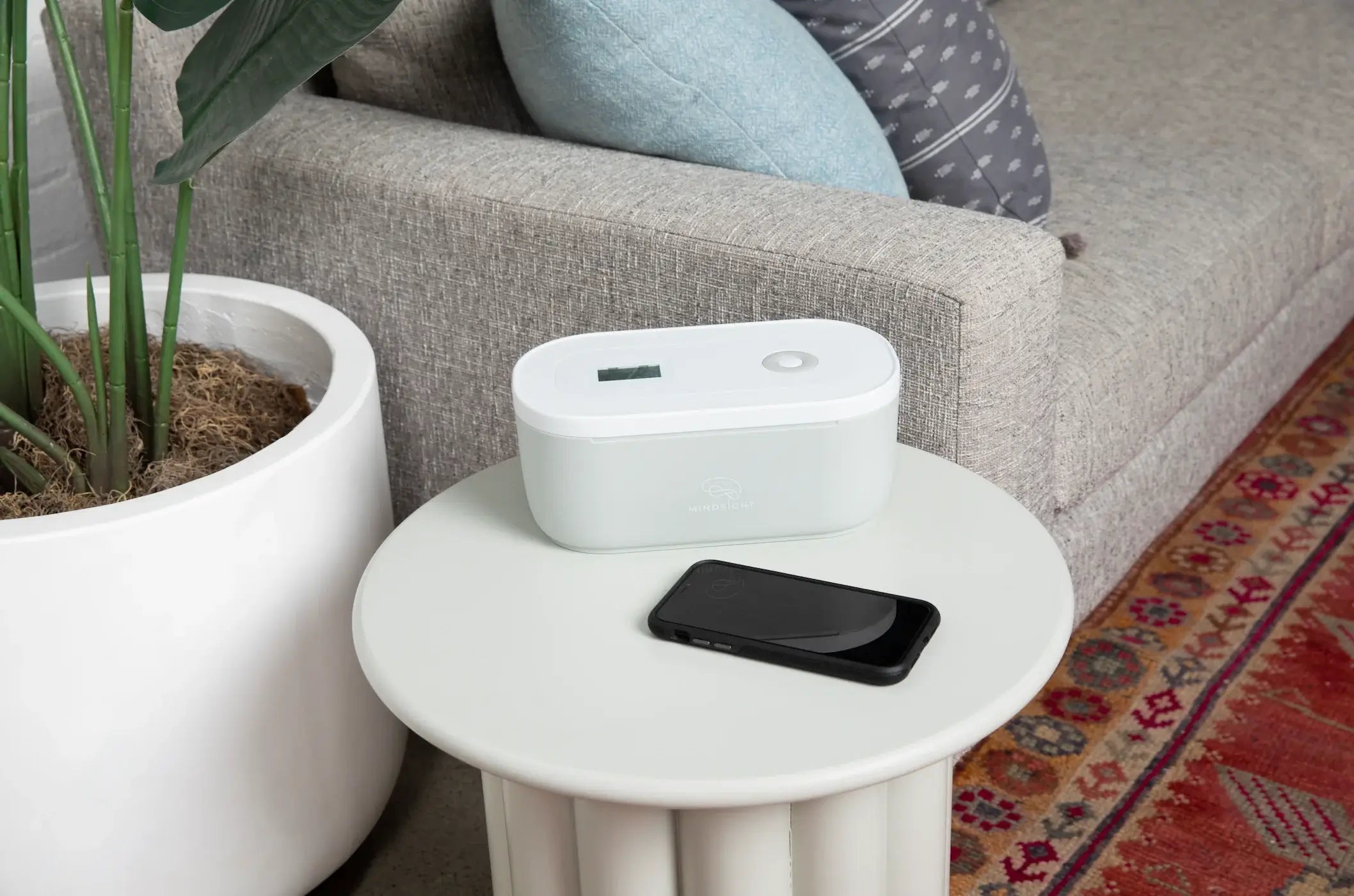
The Timed Lock Box by Mindsight is designed to create a physical boundary between you and your phone.
At night, this can be especially helpful because your energy and willpower are often lower. Instead of having to decide again and again not to scroll, you make one decision: place your phone inside and set the timer.
The Timed Lock Box can help support:
- Screen-free evenings
- Bedtime wind-down routines
- Reading time
- Family time
- Phone-free dinners
- Weekend resets
- Better sleep habits
- Reducing late-night scrolling
This physical boundary adds friction to the habit. When your phone is unavailable, the automatic reach is interrupted.
That pause creates space for a different choice.
You might read. You might stretch. You might talk to someone. You might go to sleep earlier. You might simply sit quietly for a few minutes and let the day settle.
The Timed Lock Box does not remove technology from your life. It helps technology stay in its place.
Timed Lock Box
A simple physical boundary that helps create phone-free evenings, reduce late-night scrolling, and protect your wind-down routine.
Explore the Timed Lock BoxFinal Thoughts
Nighttime scrolling is easy to fall into because it offers quick relief at the end of a long day.
But quick relief is not always the same as real rest.
If scrolling is stealing your evenings, start by creating one small boundary. Choose a phone cutoff time. Move your device out of reach. Replace the habit with something calmer. Give your brain a chance to wind down without constant input.
You do not have to fix every phone habit at once.
Start with tonight.
Put the phone away for one small window. Let your evening get quieter. Let your body remember what rest feels like when the scroll is not steering the ship.