Table of Contents
- Introduction — Why Breathing Helps Anxiety
- What Happens to Your Body When You’re Anxious
- Top 3 Breathing Techniques for Anxiety
- Common Struggles With Breathing Techniques
- Introducing the Breathing Buddha — A Tactile Guide
- How to Practice Breathing Tools With the Breathing Buddha
- Bonus: Guided Breathing Support
- Conclusion + Call to Action
Introduction — Why Breathing Helps Anxiety
Anxiety often feels like something that happens to you — fast heartbeat, racing thoughts, tight chest, restless body. But one part of your nervous system is always within your control: your breath.
Breathing tools for anxiety work because your breathing pattern is directly connected to your nervous system. When you slow your breath, your body receives the signal that it’s safe. Your heart rate drops. Muscles soften. Thoughts quiet down. And the stress response begins to turn off.
This guide shows you the most effective breathing tools for anxiety and introduces a simple tactile tool that makes them easier to practice and stick with.
What Happens to Your Body When You’re Anxious
When anxiety hits, your nervous system enters fight-or-flight mode. Your breathing becomes shallow and fast, sending constant danger signals to your brain. This feedback loop keeps anxiety alive.
Slow, controlled breathing does the opposite. It activates your parasympathetic nervous system — the part responsible for rest, recovery, and calm. In other words, your breath becomes the remote control for your stress response.
Top 3 Breathing Techniques for Anxiety
1. Box Breathing
A simple rhythm used by athletes, first responders, and therapists:
- Inhale for 4
- Hold for 4
- Exhale for 4
- Hold for 4
Repeat for 2–5 minutes. This steady rhythm interrupts panic and brings your body back into balance.
2. 4‑7‑8 Breathing
- Inhale for 4
- Hold for 7
- Exhale for 8
Repeat 4–6 rounds. The long exhale is especially powerful for calming anxiety.
3. Deep Belly Breathing
- Place one hand on your chest, one on your stomach
- Inhale slowly so your stomach rises
- Exhale gently so it falls
- Continue for 3–5 minutes
This sends immediate relaxation signals throughout your body.
Common Struggles With Breathing Techniques
Even though breathing tools for anxiety work, many people struggle to stay consistent:
- Forgetting the breathing pattern
- Getting distracted by anxious thoughts
- Feeling unsure if they’re “doing it right”
- Losing motivation to practice regularly
This is where a tactile, visual guide makes a major difference.
Introducing the Breathing Buddha — A Tactile Guide
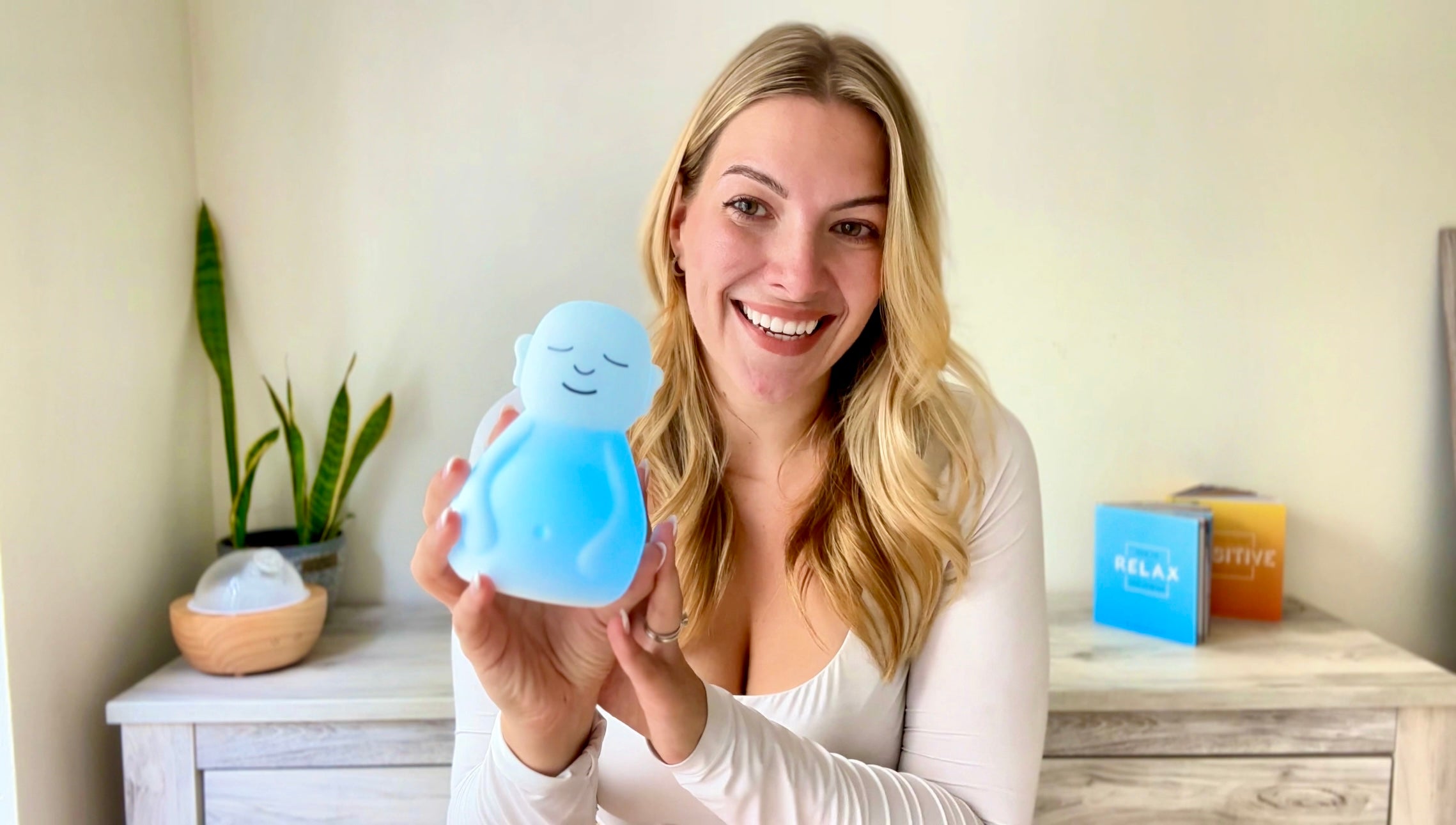
The Breathing Buddha is a small, calming visual and tactile tool that guides your breathing in real time. Instead of counting in your head or checking your phone, you simply follow the gentle visual cues of the Buddha.
How It Works
- The expanding and contracting light shows when to inhale and exhale
- Your hands and eyes stay engaged
- Your mind stays focused on the rhythm
Why It Helps
- Makes breathing exercises easier
- Reduces mental effort
- Increases consistency
- Turns breathwork into a calming ritual instead of a task
When to Use It
- During anxiety or panic
- Before bed
- During work breaks
- Anytime you feel overwhelmed
How to Practice Breathing Tools With the Breathing Buddha
Sit comfortably and place the Breathing Buddha where you can see it clearly.
For Box Breathing:
Follow the light as it expands, pauses, contracts, and pauses again — matching each phase to your breath.
For 4‑7‑8 Breathing:
Inhale as the light rises, hold gently, and exhale slowly as it falls.
For Deep Belly Breathing:
Let the visual rhythm guide long, slow, full breaths into your stomach.
Most people feel noticeably calmer in under two minutes.
Bonus: Guided Breathing Support
To strengthen your practice, pair your breathing tools with short guided breathing audios or animations. These reinforce technique, build consistency, and deepen relaxation.
Conclusion + Call to Action
Breathing tools for anxiety are one of the simplest and most powerful ways to calm your mind and body — no medication, no screens, no complicated routines. With the right technique and the right support, your breath becomes a reliable anchor anytime anxiety appears.
If you want an easier, more enjoyable way to practice, the Breathing Buddha helps you slow down, focus, and relax — one breath at a time.