How to Be More Present in Everyday Life
- What Does It Mean to Be Present?
- Why Being Present Can Be Difficult
- How to Be More Present in Everyday Life
- Start With One Moment at a Time
- Put Away Distractions
- Practice Single-Tasking
- Pay Attention to Your Surroundings
- Become More Present During Conversations
- Make Ordinary Activities More Mindful
- Create Intentional Phone-Free Moments
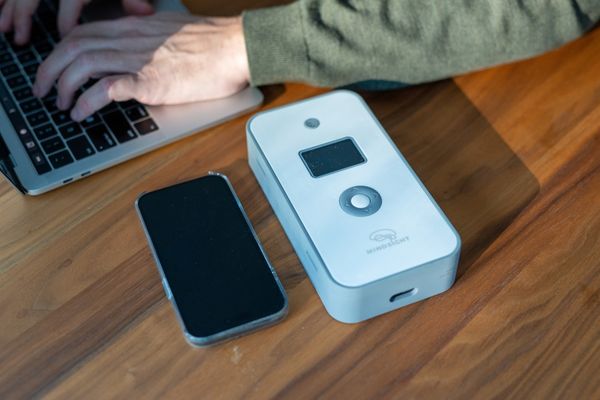
- Spotlight: Mindsight Phone Block
- Build Presence Into Your Daily Routine
- Frequently Asked Questions
- Final Thoughts
1. What Does It Mean to Be Present?
Being present means giving your attention to what is happening right now rather than constantly being pulled toward the past, the future, or the next distraction.
It does not mean your mind has to be completely empty.
You can still have thoughts, make plans, remember something from earlier, or think about what you need to do later. The difference is that you notice what is happening instead of automatically allowing every thought or notification to take your attention somewhere else.
Mindfulness is often described as paying attention to the present moment with awareness and without judgment. It can be practiced during ordinary activities rather than requiring a dedicated meditation session. That makes presence something you can practice throughout an ordinary day.
2. Why Being Present Can Be Difficult
Modern life creates plenty of reasons to divide your attention. You may be eating while watching videos, talking to someone while checking notifications, working while switching between tabs, or walking while thinking about everything you need to accomplish later.
Your body may be in one place while your attention is somewhere completely different.
Phones can make this especially easy. A notification can interrupt a conversation. A quick glance at a message can lead to checking another app. A moment of boredom can immediately become an opportunity to scroll.
Digital distractions can become automatic, which is one reason creating intentional barriers can make it easier to return attention to the current moment. The goal is not to eliminate every distraction—it is to become better at choosing where your attention goes.
3. How to Be More Present in Everyday Life
You do not need to completely change your schedule to become more present. Instead, look for ordinary moments where you can practice paying attention.
Try focusing on:
- The conversation you are having
- The food you are eating
- The walk you are taking
- The task directly in front of you
- The sounds around you
- The people you are spending time with
- The physical sensations in your body
- What you can see, hear, and notice in your surroundings
Small moments of attention can become a practical way to bring more awareness into your day.
4. Start With One Moment at a Time
One of the easiest ways to practice presence is to stop trying to be present all day. That goal can feel unrealistic.
Instead, choose one moment. For example:
“Pay attention during the first five minutes of my walk.”
“Listen carefully during my next conversation.”
Once you become comfortable focusing on one moment, you can gradually expand the practice. Presence does not have to be an all-or-nothing lifestyle; it can happen in small pieces.
5. Put Away Distractions
Sometimes the easiest way to become more present is to remove something that is competing for your attention:
- If you are having dinner with your family, put your phone somewhere else.
- If you are reading, silence unnecessary notifications.
- If you are spending time with someone, consider keeping your phone out of sight.
- If you are working on an important task, create a period when recreational phone use is not immediately available.
You are not trying to prove that you have enough willpower to ignore every distraction. You are creating an environment where paying attention becomes easier.
6. Practice Single-Tasking
Multitasking can make it feel like you are accomplishing more, but constantly switching between tasks can fragment your attention. Instead, experiment with doing one thing at a time.
• When eating, eat.
• When reading, read.
• When talking, listen.
• When working, work.
• When walking, walk.
This sounds simple, but it can feel surprisingly different when you stop adding another source of stimulation to every activity. A single-tasking habit gives your attention somewhere specific to go.
7. Pay Attention to Your Surroundings
You can practice presence without changing what you are doing. Simply notice more:
- While walking outside: Pay attention to the temperature, sounds, movement, light, and surfaces around you.
- While drinking coffee: Notice the smell, temperature, taste, and texture.
- While sitting in a room: Notice the sounds in the background.
- While cooking: Pay attention to the ingredients, movements, smells, and sounds.
These observations bring your attention back to your immediate experience. You do not need an app to do this—you simply need to notice.
8. Become More Present During Conversations
Conversations are one of the clearest opportunities to practice being present. Instead of planning your response while the other person is speaking, try listening to what they are actually saying:
- Put your phone away.
- Make eye contact when appropriate.
- Notice your impulse to interrupt.
- Allow a few seconds before responding.
- Ask a follow-up question when you want to understand something better.
Being present does not require saying anything profound. Sometimes it simply means giving another person your full attention.
9. Make Ordinary Activities More Mindful
You can turn everyday routines into opportunities for presence:
- While Brushing Your Teeth: Instead of immediately thinking about your schedule, notice the movement, sensation, and sounds.
- While Showering: Pay attention to the temperature of the water, the sounds around you, and how your body feels.
- While Eating: Slow down enough to notice the taste and texture of your food.
- While Walking: Notice your surroundings instead of automatically reaching for your phone.
- While Cleaning: Focus on the specific task instead of mentally jumping ahead to everything else you need to accomplish.
These activities do not have to become formal meditation exercises. They can simply become moments when you practice noticing what is already happening.
10. Create Intentional Phone-Free Moments
Your phone does not need to disappear from your life for you to become more present. Instead, create specific moments when you choose not to use it.
Consider making these activities phone-free:
- Meals
- Conversations
- Walks
- Reading
- Family activities
- Hobbies
- Morning routines
- Evening wind-down time
- Focused work sessions
The key word is intentional. You are not avoiding your phone because phones are inherently bad. You are temporarily choosing something else—whether that is a conversation, a meal, a book, a hobby, a walk, or simply a quiet moment.
11. Spotlight: Mindsight Phone Block
The Mindsight Phone Block is designed for moments when you want to stay connected to your surroundings without completely turning your phone off or putting it somewhere inaccessible.
Phone Block is a silicone screen cover that adds a small amount of physical friction to phone checking. It attaches with an elastic strap in a few seconds and is designed to interrupt automatic checking while keeping the phone accessible for important alerts or calls.
That makes it useful for situations where you want your attention on something other than your screen. You can use it during:
- Meals & family time
- Conversations
- Work focus blocks & school projects
- Reading & relaxation
- Social activities
The cover is intentionally not a complete blackout. A small border remains visible, allowing the phone to stay accessible while adding a physical reminder to pause before checking.
The idea is simple: Create a moment between the impulse to check and the decision to unlock.
Explore Phone Block →12. Build Presence Into Your Daily Routine
Once you discover a few moments when being present feels valuable, turn them into repeatable habits. You might create a simple routine like this:
Spend the first few minutes of your day without immediately reaching for your phone.
Keep your attention on your food and the people around you.
Choose specific periods for uninterrupted attention.
Keep unnecessary phone checking out of the interaction.
Take a walk without automatically filling every quiet moment with a screen.
Give yourself at least one period where you intentionally slow down and pay attention to what is happening around you.
You do not need to practice all of these at once. Choose one, repeat it, and then add another.
13. Frequently Asked Questions
What does it mean to be more present?
Being present means paying attention to what is happening in the current moment rather than automatically being absorbed in thoughts, distractions, or digital stimulation.
How can I become more present every day?
Start with ordinary activities such as eating, walking, talking, reading, or completing household tasks. Focus on one activity at a time and intentionally reduce distractions.
Does being present mean I have to meditate?
No. Meditation can be one way to practice mindfulness, but presence can also be practiced during everyday activities such as eating, walking, listening, or completing routine tasks.
How does my phone affect being present?
Frequent notifications, checking, and scrolling can compete with your attention. Creating intentional phone-free moments or adding physical distance from your device can help reduce those interruptions.
How can I be more present during conversations?
Put your phone away, listen without immediately preparing your response, maintain appropriate eye contact, and focus on what the other person is saying.
Can Phone Block help me be more present?
Phone Block is designed to add physical friction to impulsive phone checking. It can be used during meals, conversations, work sessions, family activities, and other moments when you want to focus on what is happening around you.
14. Final Thoughts
Being more present does not require completely changing your lifestyle. It starts with noticing where your attention goes.
You can practice presence while eating breakfast, talking with someone you care about, walking outside, working on a project, or simply sitting quietly for a few minutes.
The next time you notice yourself automatically reaching for your phone, pause. Look around. Notice what you were doing. Then decide whether checking your phone is actually what you want to do.
That small pause can turn an automatic habit into an intentional choice. And over time, choosing to pay attention to the moment in front of you can become a natural part of everyday life.