How to Set Better Screen Time Boundaries
- Why Screen Time Boundaries Matter
- What Makes Screen Time So Difficult to Control
- How to Set Better Screen Time Boundaries
- Start With One Specific Boundary
- Create Physical Distance From Your Devices
- Decide When Your Phone Is Off-Limits
- Make Your Boundaries Easy to Follow
- Replace Screen Time With Something Intentional
- Use Timed Breaks Instead of Relying on Willpower
- Spotlight: Mindsight Timed Lock Box Plus
- How to Build a Sustainable Screen Time Routine
- Frequently Asked Questions
- Final Thoughts
1. Why Screen Time Boundaries Matter
Phones are useful for communication, work, entertainment, navigation, learning, and countless everyday tasks. The goal of healthier technology use is not necessarily to eliminate screens.
The bigger goal is to make screen use more intentional.
Without clear boundaries, checking your phone can easily become the default response to boredom, waiting, stress, notifications, or even a moment of silence. A quick check can turn into several minutes of scrolling, and repeated interruptions can make it harder to stay focused on whatever you were originally doing.
That is why screen time boundaries can be more practical than simply telling yourself to “use your phone less.” A boundary creates a specific rule for when technology is useful and when it needs to be put aside.
2. What Makes Screen Time So Difficult to Control
One reason screen habits can be difficult to change is that phones are always within reach.
You may intend to work for an hour, read before bed, eat dinner without distractions, or spend time with your family. Then your phone lights up or you suddenly wonder whether you have a new message. The device is right there. The easier it is to access, the easier it becomes to check automatically.
Another challenge is that screen use can fill small gaps throughout the day. Waiting for coffee, standing in line, sitting on the couch, taking a break, or waiting for an appointment can all become opportunities to reach for a phone.
Over time, these small moments can create a pattern of constant digital stimulation. Better boundaries interrupt that pattern.
3. How to Set Better Screen Time Boundaries
You do not need to create a complicated digital detox plan. Start by deciding where screens are helping you and where they are interfering with the things you actually want to do.
A practical screen-time boundary can be as simple as:
- No phone during meals
- No recreational scrolling during work blocks
- No phone in bed
- No social media before breakfast
- One phone-free hour in the evening
- Devices away during family conversations
- A set amount of entertainment time each evening
The important part is making the boundary specific. “Use my phone less” is difficult to measure. “Keep my phone away during dinner” is much easier to follow.
4. Start With One Specific Boundary
Trying to change every screen habit at once can make the process unnecessarily difficult. Instead, choose the situation where your phone causes the most disruption:
- Maybe you lose time scrolling at night.
- Maybe you check messages every few minutes while working.
- Maybe everyone in the household uses their phones during meals.
- Maybe you spend your entire break looking at another screen instead of actually resting.
Choose one situation and create one clear rule around it. For example:
A specific boundary gives you something concrete to practice. Once that behavior becomes easier, you can introduce another boundary.
5. Create Physical Distance From Your Devices
A screen-time boundary becomes easier when your environment supports it. If your phone is sitting directly beside your laptop, keeping your attention away from it requires constant self-control. If it is across the room, inside a drawer, or somewhere outside your immediate workspace, checking it requires an extra step.
That extra step matters. Physical distance creates a pause between the impulse to check and the action of checking. Try creating designated locations for your devices:
- A phone basket during family meals
- A charging station outside the bedroom
- A drawer for phones during focused work
- A designated spot near the front door
- A secure place for devices during study sessions
The goal is not to make your phone inaccessible all day. It is to make unnecessary checking less automatic.
6. Decide When Your Phone Is Off-Limits
A strong boundary is easier to maintain when you decide the rules before the temptation appears. Consider identifying several predictable parts of your day when you want to be less connected:
- During Meals: Eating without a phone can make it easier to focus on food and conversation rather than notifications and feeds.
- During Focused Work: If you need uninterrupted concentration, consider creating a defined period when recreational phone use is off-limits.
- During Conversations: Putting the phone away sends a simple signal that the person in front of you has your attention.
- Before Bed: Creating distance from your phone can help establish a clearer transition between active screen use and your nighttime routine.
- During Breaks: Not every break needs to involve another screen. Walking, stretching, getting water, or simply sitting quietly can provide a genuine mental change of pace.
7. Make Your Boundaries Easy to Follow
The best boundary is one you can realistically maintain. If your rule requires constant decision-making, you may eventually get tired of enforcing it. Instead, build boundaries into your environment:
- Rather than repeatedly telling yourself not to check your phone while working, put the device somewhere that makes casual checking inconvenient.
- Instead of deciding every night whether you should stop scrolling, choose a consistent time when recreational phone use ends.
- Instead of negotiating with yourself during every meal, create a household rule that phones stay in a designated location until everyone is finished.
Good boundaries reduce the number of decisions you have to make.
8. Replace Screen Time With Something Intentional
Removing screen time creates an empty space. That can be useful, but it can also make the phone tempting again if you do not have anything else to do. Think about what you actually want more of. Maybe you want to:
- Read
- Exercise
- Cook
- Talk with family
- Spend time outside
- Practice a hobby
- Journal
- Stretch
- Work on a creative project
- Simply sit and rest
You do not need to fill every phone-free moment with productivity. Sometimes the replacement should simply be quiet. The point is to make your offline time feel worthwhile rather than like something you are missing out on.
9. Use Timed Breaks Instead of Relying on Willpower
One of the easiest ways to experiment with better screen boundaries is to create a defined period when you will not access your phone.
Instead of thinking: “I shouldn't use my phone,” try: “I am going to put my phone away for the next 30 minutes.”
That small shift gives the boundary a beginning and an end. You can start with short periods and gradually increase them:
- 15 minutes during a work break
- 30 minutes during dinner
- 45 minutes during focused work
- 60 minutes before bed
- Several hours during a weekend activity
For some people, the biggest challenge is knowing that the phone is still available. That is where a physical barrier can make a screen-time boundary easier to maintain.
10. Spotlight: Mindsight Timed Lock Box Plus
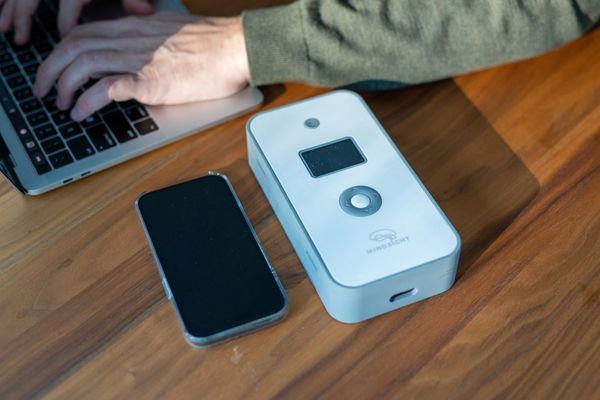
The Mindsight Timed Lock Box Plus is designed for situations where simply deciding not to use your phone is not enough.
Instead of keeping the phone beside you and repeatedly resisting the temptation to check it, you can place your devices inside the box and set a defined period of time.
The current Timed Lock Box comes in Standard and Plus sizes, with the Plus option providing additional space for managing multiple devices. The box offers three lock modes: Fortress Mode, Standard Mode, and Lockbox Only. It also includes a charging slot so compatible devices can charge while locked.
That makes it useful for creating clearly defined phone-free periods at home, at work, during study sessions, or before bed.
The purpose is not to permanently separate yourself from technology; it is to create a physical boundary when you have already decided that you want a break.
Explore Timed Lock Box Plus →11. How to Build a Sustainable Screen Time Routine
Once you have experimented with a few boundaries, turn the ones that work into routines. A simple daily structure might look like this:
Keep recreational phone use limited until you have completed your basic morning routine.
Create one or more distraction-free blocks where unnecessary phone use is removed from your immediate environment.
Keep phones away from the table.
Choose a specific time when recreational screen use begins winding down.
Move your phone away from your sleeping area and transition into an activity that does not require a screen.
The goal is consistency rather than perfection. You will probably have days when the boundary does not work exactly as planned. That does not mean the system failed. Adjust it and try again.
12. Frequently Asked Questions
What are screen time boundaries?
Screen time boundaries are specific rules or limits that determine when, where, and how you use digital devices. Examples include keeping phones away during meals, limiting recreational scrolling during work, or creating a phone-free period before bed.
How can I reduce screen time without deleting apps?
Start by changing when and where you use your phone rather than removing every app. Physical distance, notification limits, designated phone-free periods, and timed breaks can all help create more intentional use.
What is the easiest screen time boundary to start with?
Choose one predictable situation, such as dinner, bedtime, or focused work. Create one simple rule and practice it consistently before adding more restrictions.
Does putting your phone in another room help reduce screen time?
Creating physical distance can make impulsive checking less convenient. If you need your phone nearby for important calls or other practical reasons, a designated location or physical barrier can provide an alternative.
How long should a phone-free period be?
There is no single ideal duration. Start with a period that feels realistic, such as 15 or 30 minutes, and increase it as the routine becomes easier.
Can a timed lock box help with screen time?
A timed lock box can create a physical barrier between you and your device during a predetermined period. Mindsight's Timed Lock Box offers adjustable timers and multiple lock modes for different levels of restriction.
13. Final Thoughts
Better screen time boundaries are not about making technology the enemy. Your phone can be useful, entertaining, and necessary. The challenge is making sure it does not automatically take over every quiet moment, work session, meal, conversation, or evening.
- Start with one boundary.
- Make it specific.
- Create physical distance when necessary.
- Give your phone-free time a purpose.
- And when willpower is not enough, use your environment to make the boundary easier to maintain.
Small periods of intentional disconnection can become habits that make your relationship with technology feel much more deliberate.