How to Create a Mindful Morning Routine
How you start your morning can shape the rest of your day. A mindful morning routine can help you slow down, focus, and begin with intention before notifications, emails, and demands start competing for your attention.
You do not need a perfect routine or a long list of wellness habits. A few simple practices, like delaying phone use, breathing slowly, moving gently, and choosing one intention, can make your morning feel calmer and more grounded.
Table of Contents
- What Is a Mindful Morning Routine?
- Why the First Part of Your Morning Matters
- Signs Your Morning Routine Is Too Stimulating
- How to Create a Mindful Morning Routine
- Avoid Starting Your Day With Your Phone
- Begin With a Simple Breathing Practice
- Add Gentle Movement
- Choose One Morning Intention
- Make Breakfast or Coffee More Mindful
- Build a Routine You Can Actually Maintain
- A Simple 15-Minute Mindful Morning Routine
- Spotlight: Breathing Buddha
- Frequently Asked Questions
- Final Thoughts
What Is a Mindful Morning Routine?
A mindful morning routine is not about creating the perfect morning.
You do not need to wake up at 5 a.m.
You do not need an hour-long meditation.
You do not need to journal three pages, exercise, prepare a complicated breakfast, and complete ten habits before starting work.
Mindfulness is much simpler.
It means paying attention to what you are doing while you are doing it.
A mindful morning creates a little space between waking up and immediately reacting to everything demanding your attention.
Instead of beginning with notifications, messages, deadlines, and scrolling, you begin with intention.
That might mean taking a few slow breaths. Stretching. Drinking water. Sitting quietly. Making coffee without checking your phone.
Even a few intentional minutes can change the tone of your morning.
Why the First Part of Your Morning Matters
Think about what happens when your alarm goes off.
For many people, the phone is already in their hand.
Alarm off. Notifications checked. Messages opened. Email scanned. Social media opened.
Before getting out of bed, the mind is already processing information.
Someone needs something. There is news to read. Work is waiting. Content is moving.
The day begins reactively.
A mindful morning creates an alternative.
Instead of immediately asking:
“What does everyone else need from me?”
You create a few moments to notice:
- How do I feel?
- What do I need?
- What matters today?
- How do I want to approach the morning?
You are not avoiding your responsibilities.
You are simply giving yourself a chance to arrive before the rest of the world does.
Signs Your Morning Routine Is Too Stimulating
You may benefit from a calmer morning if you regularly:
- Check notifications immediately after waking
- Scroll in bed longer than intended
- Feel rushed before the day begins
- Start thinking about work before getting out of bed
- Jump between multiple tasks while getting ready
- Feel mentally scattered in the morning
- Skip breakfast or rush through it
- Feel stressed before anything stressful has actually happened
- Struggle to decide what deserves your attention first
A busy morning does not automatically mean something is wrong.
Some schedules are simply demanding.
The goal is to find small moments where unnecessary stimulation can be reduced.
Even five quiet minutes can become an anchor.
How to Create a Mindful Morning Routine
The most effective routine is not necessarily the longest one.
It is the one you can repeat.
Instead of trying to redesign your entire morning, choose a few small habits.
A simple structure might include:
Wake → Pause → Breathe → Move → Set intention → Begin
Each step can take only a few minutes.
You can always expand your routine later.
Start by making the first part of your morning less reactive.
Avoid Starting Your Day With Your Phone
One of the simplest ways to create a more mindful morning is to delay unnecessary phone use.
You do not need to avoid your phone for hours.
Try creating a small boundary.
For example:
- No social media until after breakfast.
- No email until you are dressed.
- No news for the first 20 minutes.
- No scrolling while still in bed.
This gives your attention time to settle before incoming information begins competing for it.
If your phone is also your alarm, turn the alarm off and place the device back down.
Then begin your morning before opening anything else.
Use those first few minutes for yourself.
Begin With a Simple Breathing Practice
Your breath is one of the easiest mindfulness anchors because it is always available.
You do not need a complicated technique.
- Sit or stand comfortably.
- Allow your shoulders to relax.
- Inhale gently.
- Exhale slowly.
- Notice the movement of your breath.
- Repeat for a few cycles.
The goal is not to force yourself into a particular emotional state.
Simply pay attention.
If your thoughts wander, return to the next breath.
This creates a small pause between sleep and the demands of your day.
It can also make mindfulness feel much more approachable for beginners who struggle with longer meditation sessions.
Add Gentle Movement
You have been relatively still for hours while sleeping.
Movement can help you transition into the day.
It does not need to be a full workout.
Try:
- Stretching your arms overhead.
- Rolling your shoulders.
- Walking around the room.
- Doing several gentle stretches.
- Taking a short walk outside.
- Moving slowly through a few yoga poses.
Pay attention to how your body feels instead of rushing through the movement.
- Where do you feel tight?
- What feels comfortable?
- How does your breathing change?
When movement becomes something you notice rather than simply complete, it becomes part of your mindfulness practice.
Choose One Morning Intention
To-do lists tell you what you need to accomplish.
Intentions remind you how you want to approach those things.
Before the day gets busy, ask:
“How do I want to show up today?”
Your answer might be:
- Patient
- Focused
- Calm
- Curious
- Present
- Flexible
- Kind
- Intentional
You do not need to create a complicated affirmation.
Choose one word or short sentence.
For example:
- “Today, I will focus on one thing at a time.”
- “I don’t need to rush everything.”
An intention gives you something simple to return to when the day becomes demanding.
Make Breakfast or Coffee More Mindful
Ordinary activities can become mindfulness practices.
Coffee is a good example.
Instead of making coffee while checking messages, simply make coffee.
Notice the smell. The warmth. The sound. The first sip.
If you eat breakfast, try having at least part of the meal without scrolling.
You do not need to transform breakfast into a silent meditation.
The objective is simply to experience what you are already doing with fewer competing inputs.
Mindfulness becomes much easier to maintain when it is integrated into ordinary life.
Build a Routine You Can Actually Maintain
The internet is full of elaborate morning routines.
They can look inspiring.
They can also be unrealistic.
A routine that takes 90 minutes may work beautifully on Sunday and disappear completely on a busy Wednesday.
Build for your real life.
If you have ten minutes, create a ten-minute routine.
If you have five, use five.
If mornings are extremely busy, choose one mindful action.
The most important qualities are simplicity and consistency.
Try attaching your new habit to something that already happens.
For example:
- After my alarm, I will take three slow breaths.
- After brushing my teeth, I will stretch for two minutes.
- While drinking coffee, I will choose my intention for the day.
Existing habits become reminders for new ones.
A Simple 15-Minute Mindful Morning Routine
If you want more structure, try this beginner-friendly routine.
Minutes 1–3: Arrive
Get out of bed without immediately opening social media, email, or news.
- Drink some water.
- Open the curtains.
- Notice how you feel.
Minutes 4–7: Breathe
Sit comfortably.
Take several slow, controlled breaths.
Keep your attention on the breathing pattern rather than your phone or upcoming tasks.
Minutes 8–11: Move
- Stretch gently.
- Roll your shoulders.
- Move your neck slowly.
- Walk around your room or outside.
Minutes 12–13: Choose an Intention
Ask yourself:
“What deserves my attention today?”
Choose one priority or one quality you want to bring into your day.
Minutes 14–15: Begin Slowly
Make coffee, prepare breakfast, or get ready without immediately filling the space with digital content.
Then move into the rest of your day.
Fifteen minutes is enough.
And if fifteen feels unrealistic, shorten it.
A mindful five-minute routine that happens regularly is more useful than an elaborate routine you rarely complete.
Spotlight: Breathing Buddha
If you find it difficult to maintain attention during breathing exercises, a visual cue can make the practice easier to follow.
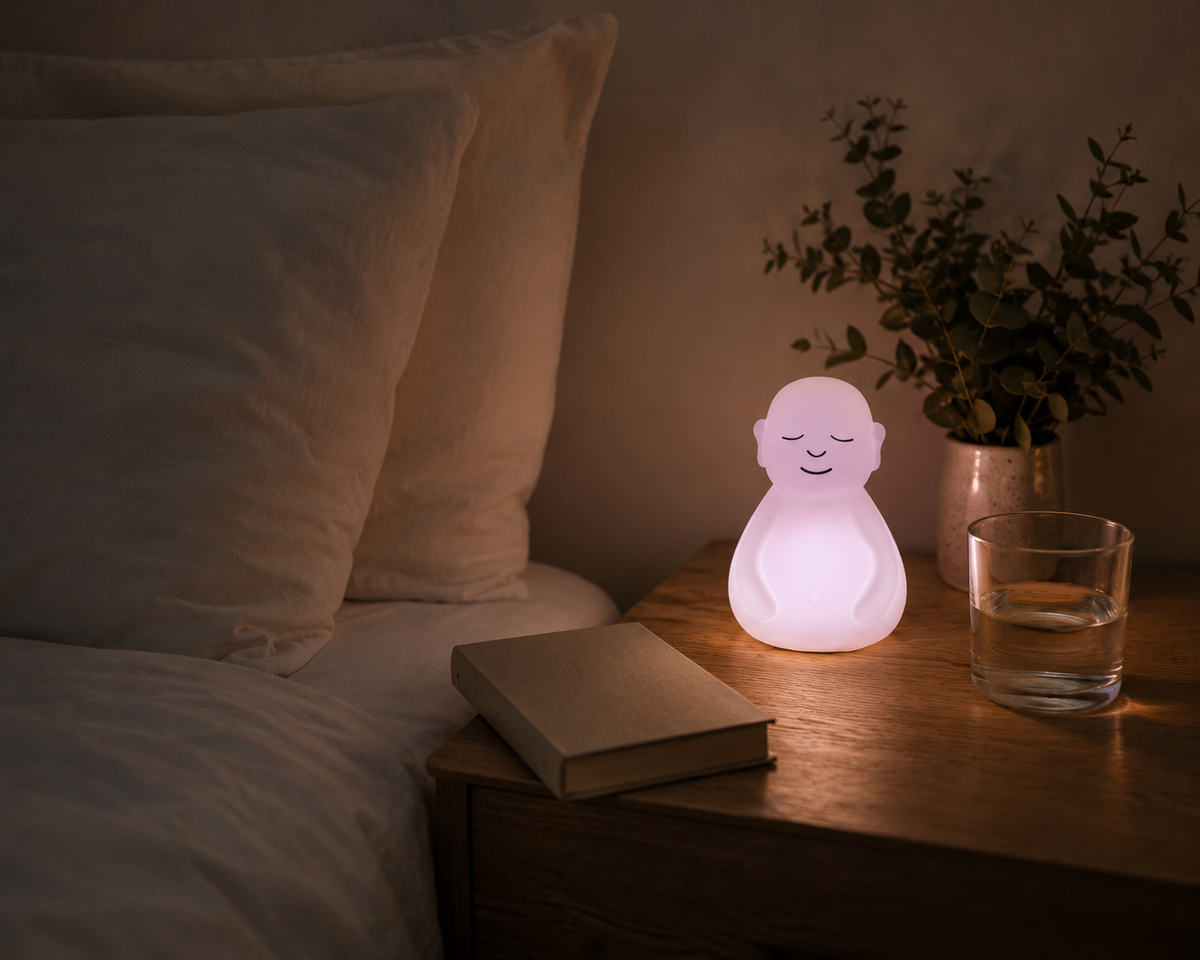
The Breathing Buddha by Mindsight is designed to guide paced breathing through simple visual light cues.
Instead of watching a timer or trying to remember a breathing count, you can follow the changing light pattern as your cue to inhale, hold, and exhale.
That makes it easy to incorporate into a mindful morning without adding another phone-based wellness routine.
Place the Breathing Buddha somewhere you naturally see in the morning.
For example:
- On your nightstand
- Beside your journal
- On your desk
- Near your morning coffee space
- In a meditation corner
Then connect it to an existing habit.
- “After I drink water, I’ll complete a breathing cycle.”
- “Before I check my phone, I’ll spend a few minutes breathing.”
The goal is not to create a complicated wellness routine.
It is to make one mindful pause easier to remember and repeat.
Breathing Buddha
A guided breathing light that uses simple visual cues to support paced breathing, calmer mornings, mindfulness practice, and screen-free focus.
Explore the Breathing BuddhaFrequently Asked Questions
What is the best mindful morning routine?
The best routine is one that fits your actual schedule. A simple combination of reduced phone use, slow breathing, gentle movement, and setting an intention can create a mindful start without requiring a long morning ritual.
How can I practice mindfulness in the morning?
Start by paying attention to one ordinary activity. Focus on your breathing, drink coffee without scrolling, stretch slowly, take a short walk, or spend a few quiet minutes noticing how you feel.
How long should a mindful morning routine be?
There is no required length. Five to fifteen minutes can be enough to create a deliberate transition into your day. If you enjoy a longer routine and have time for it, you can gradually expand it.
Should I meditate immediately after waking up?
You can, but formal meditation is not required. Breathing exercises, gentle stretching, journaling, or simply sitting quietly can also become mindful morning practices.
How do I stop checking my phone first thing in the morning?
Create a specific rule rather than a vague goal. For example, decide not to check social media until after breakfast or not to open email until you are dressed. Keeping your phone away from the bed can also reduce automatic checking.
What is a good morning breathing exercise for beginners?
Begin with comfortable, slow breathing rather than forcing a difficult pattern. Focus your attention on each inhale and exhale for a few minutes. A visual breathing guide can also make paced breathing easier to follow.
Can I create a mindful morning if I am very busy?
Yes. Mindfulness does not require a long routine. Take three slow breaths before checking your phone, stretch while your coffee is brewing, or choose one intention while getting ready. Small practices can still create a more deliberate start.
Final Thoughts
A mindful morning does not need to look perfect.
It does not require waking up before sunrise.
It does not require an hour of meditation.
And it does not require completing a long list of wellness habits before breakfast.
Start with one pause.
- Before the notifications.
- Before the emails.
- Before the scrolling.
- Before the demands of the day begin competing for your attention.
Breathe. Move. Notice how you feel. Choose what matters today. Then begin.
If guided breathing would make that morning pause easier to maintain, the Breathing Buddha by Mindsight provides a simple visual cue you can incorporate into your routine without reaching for another app.
Your morning does not need to become longer.
It can simply become more intentional.
Explore the Breathing Buddha
Add a simple guided breathing cue to your mindful morning routine.
Shop Breathing Buddha