How to Relax Without Using Your Phone
If scrolling has become your default way to unwind, screen-free relaxation can help you recharge without adding more stimulation to your day.
You do not need to give up technology completely. The goal is to create simple phone-free windows where your attention can slow down, your body can settle, and your free time can feel more restorative.
Table of Contents
- Why We Automatically Reach for Our Phones to Relax
- Is Scrolling Actually Rest?
- Why Screen-Free Relaxation Can Feel Difficult at First
- How to Relax Without Using Your Phone
- Create a Transition Between Work and Rest
- Choose Activities That Occupy Your Hands
- Bring Back Low-Stimulation Hobbies
- Spend Time Outside
- Make Relaxation More Social
- Create a Phone-Free Relaxation Space
- Build a Screen-Free Evening Routine
- Spotlight: Timed Lock Box
- Frequently Asked Questions
- Final Thoughts
Why We Automatically Reach for Our Phones to Relax
You finally have a free moment.
You sit down.
Almost automatically, your hand reaches for your phone.
A few minutes of scrolling sounds like an easy way to decompress. There is nothing to prepare. Nothing to plan. Entertainment is immediately available.
That convenience is exactly why phones can become our default response to boredom, stress, waiting, and downtime.
Over time, a simple pattern can develop:
Free moment → Pick up phone → Scroll
Eventually, you may reach for your phone before consciously deciding what you actually want to do.
The problem is not that every minute spent on your phone is harmful.
The bigger question is whether scrolling is helping you relax in the way you intended.
Sometimes what feels like downtime is simply a different form of stimulation.
Learning how to relax without your phone gives you more choices about how you spend your free time.
Is Scrolling Actually Rest?
Rest and entertainment are not always the same thing.
You can stop working without giving your attention a break.
Scrolling still asks your brain to process a continuous stream of information.
A video. A headline. A message. A comment. Another video. A notification. Something funny. Something stressful. Something you want to buy. Something you suddenly feel like you should be doing.
Your body may be sitting still, but your attention continues moving.
That is why you can spend a long time on your phone and still feel mentally busy afterward.
Screen-free relaxation creates a different experience. Instead of constantly receiving new information, you give your attention fewer things to process.
Why Screen-Free Relaxation Can Feel Difficult at First
Put your phone away and something interesting may happen.
You feel bored. Or restless. Or unsure what to do.
That does not necessarily mean you need your phone.
It may simply mean your brain has become accustomed to immediate stimulation whenever nothing else is happening.
Phones eliminate many small moments that used to contain nothing.
- Waiting in line
- Sitting on the couch
- Eating alone
- Riding in a car
- Taking a break from work
- Waiting thirty seconds for coffee
When every empty moment becomes filled with content, quiet can start to feel unusual.
Screen-free relaxation may therefore require some adjustment.
The goal is not to make yourself sit in silence for hours.
It is to rediscover activities that allow your attention to move at a slower pace.
How to Relax Without Using Your Phone
The easiest way to reduce recreational phone use is not simply telling yourself:
“Don’t use your phone.”
That removes a behavior without replacing it.
Instead, decide what you will do.
Your alternative should be:
- Easy to begin
- Enjoyable
- Accessible
- Appropriate for your energy level
You do not need to turn every screen-free moment into a productive activity.
Relaxation does not have to improve your fitness, teach you a skill, organize your home, or move you toward a goal.
Sometimes relaxing is enough.
Here are several ways to make that easier.
Create a Transition Between Work and Rest
Many people move directly from work screens to personal screens.
Laptop closes. Phone opens.
Instead, create a transition.
When work ends, give yourself a short period without either device.
Try:
- Taking a shower
- Changing clothes
- Walking around the neighborhood
- Preparing a drink
- Stretching
- Sitting outside
- Making dinner
- Listening to music
The activity itself is less important than the boundary it creates.
You are signaling that one part of your day has ended and another has begun.
Even a short transition can prevent your phone from automatically becoming the first destination after work.
Choose Activities That Occupy Your Hands
Phones are physical habits as much as digital ones.
We hold them. Tap them. Swipe them. Pick them up without thinking.
That is one reason hands-on activities can make screen-free time easier.
Try:
- Drawing
- Cooking
- Baking
- Knitting
- Building something
- Gardening
- Playing an instrument
- Doing a puzzle
- Writing by hand
- Playing cards
- Working with clay
The activity does not need to be impressive.
Keeping your hands gently occupied can reduce the automatic impulse to pick up a device.
Bring Back Low-Stimulation Hobbies
Not every hobby needs to compete with the speed of social media.
In fact, that is part of the point.
Slow hobbies allow your attention to settle into one activity.
Reading is one of the simplest examples.
Instead of switching between dozens of pieces of content, you remain with one story or subject.
Other low-stimulation activities might include:
- Journaling
- Painting
- Coloring
- Puzzles
- Listening to an album
- Woodworking
- Birdwatching
- Taking photographs with a dedicated camera
- Gardening
- Walking
Choose something you genuinely enjoy rather than something you think you are supposed to enjoy.
Screen-free relaxation should feel like leisure, not homework.
Spend Time Outside
Going outside naturally changes your environment.
That environmental shift can make it easier to break automatic phone routines.
Take a short walk without checking notifications. Sit somewhere outdoors with coffee. Spend time in a garden. Watch the sunset. Walk your dog. Eat outside. Visit a park.
You do not need a long hike or elaborate nature trip.
Even a short period outside can give your attention something different to engage with.
Notice what is around you:
- Temperature
- Sound
- Movement
- Light
The purpose is simple: Be where you are without constantly adding digital input.
Make Relaxation More Social
Phones often provide the feeling of connection.
But sometimes the best alternative to digital connection is direct connection.
Have dinner with someone. Play a board game. Take a walk together. Talk over coffee. Cook with your family. Visit a friend.
The phone does not necessarily need to disappear completely.
Try keeping it away from the table or outside the room for a defined period.
Removing the possibility of checking can make it easier to stay engaged in the conversation happening in front of you.
Create a Phone-Free Relaxation Space
Your environment influences your habits.
If your phone is beside you, checking it takes almost no effort.
If it is somewhere else, the habit requires a deliberate decision.
Choose one place in your home where your phone does not normally go.
It could be:
- Your reading chair
- The dining table
- A balcony
- A meditation corner
- A section of your bedroom
- A backyard space
That location becomes associated with lower stimulation.
You are not trying to make your entire home phone-free.
You are creating one reliable place where your attention gets a break.
Build a Screen-Free Evening Routine
Evenings are an ideal time to experiment with screen-free relaxation.
Start small.
You do not need to eliminate screens for the entire night.
Try creating a 30-minute window.
A Simple 30-Minute Screen-Free Reset
First 5 minutes: Put the phone away
Place your device somewhere you cannot automatically reach it.
Next 10 minutes: Transition
Change clothes, make tea, stretch, or tidy one small area.
Next 10 minutes: Do something enjoyable
Read, draw, journal, listen to music, work on a puzzle, or simply talk with someone.
Final 5 minutes: Slow down
Sit quietly, breathe slowly, or prepare for the next part of your evening.
If thirty minutes feels easy, extend it.
If it feels difficult, start with fifteen.
The objective is not reaching a specific number.
It is learning that downtime does not have to begin with a screen.
Spotlight: Timed Lock Box
Sometimes the hardest part of screen-free relaxation is knowing your phone is still within reach.
You put it down.
Five minutes later, you pick it back up.
That is where creating physical distance can help.
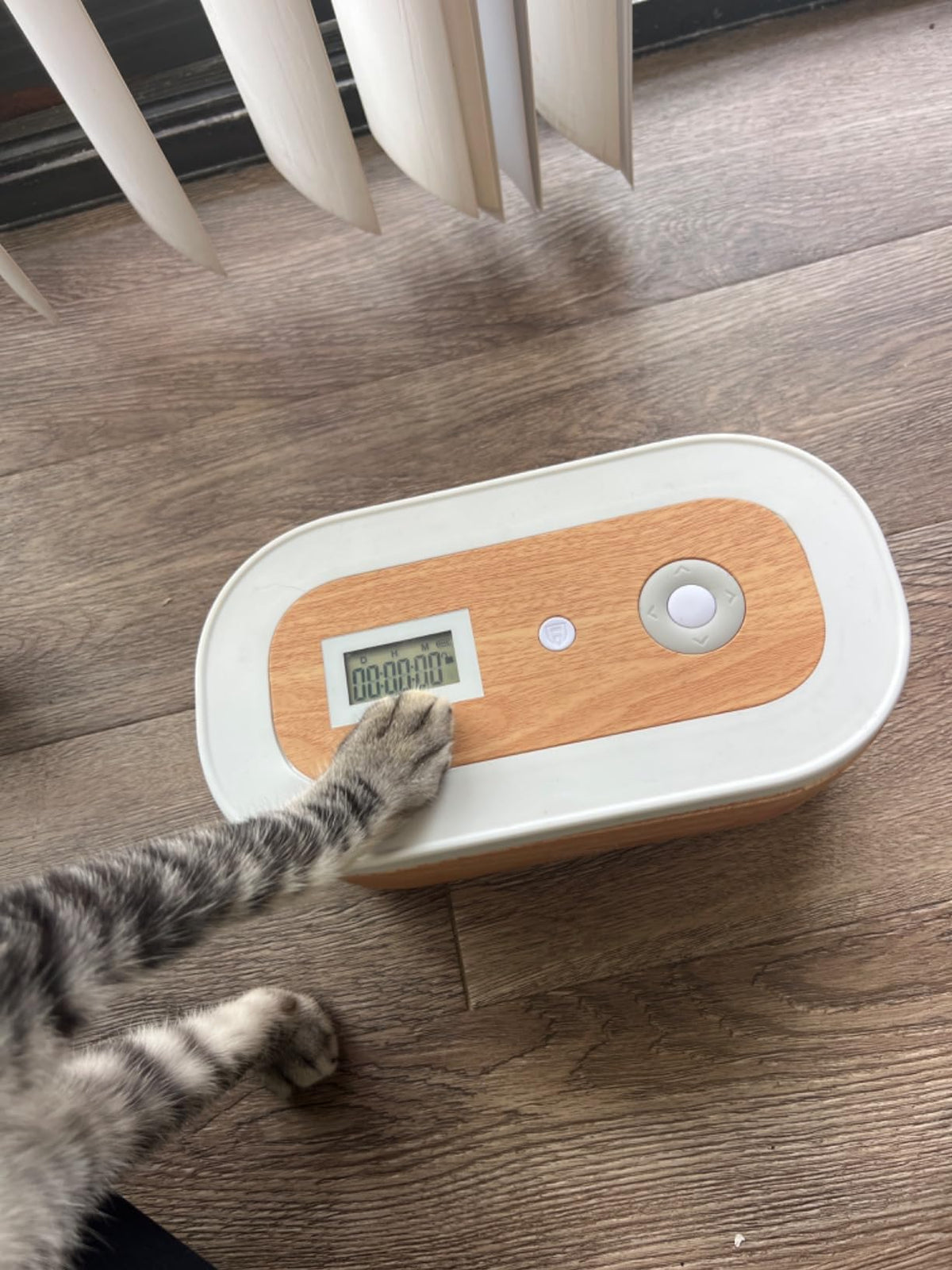
The Timed Lock Box by Mindsight provides a simple physical boundary between you and your device for a period you choose.
Place your phone inside. Set the timer. Then use that window for something else.
You might use it during:
- Reading time
- Dinner
- Family activities
- Creative hobbies
- A quiet evening routine
- Journaling
- A weekend reset
- Before-bed downtime
Instead of repeatedly deciding whether you should check your phone, the boundary has already been created.
That can make screen-free relaxation feel less like an ongoing battle with self-control.
The goal is not to remove technology from your life.
It is to create periods when technology is not automatically controlling your attention.
Timed Lock Box
A simple physical boundary that helps create screen-free windows for reading, dinner, family activities, creative hobbies, evening routines, and before-bed downtime.
Explore the Timed Lock BoxFrequently Asked Questions
How can I relax without scrolling on my phone?
Replace scrolling with a specific low-stimulation activity instead of simply trying not to use your phone. Reading, walking, cooking, journaling, puzzles, music, crafts, and spending time outdoors are all practical alternatives.
Why do I always reach for my phone when I have free time?
Checking your phone can become an automatic response to boredom, stress, waiting, or unstructured time. Repeating the behavior makes the connection between a free moment and checking your phone feel increasingly natural.
What can I do at night instead of being on my phone?
Try reading, stretching, journaling, listening to music, preparing for the next day, doing a puzzle, talking with someone, taking a warm shower, or practicing a calming breathing routine.
How long should I stay off my phone to relax?
There is no required amount of time. Start with a realistic period such as 15 or 30 minutes. If it feels helpful, gradually extend your screen-free window.
How do I stop picking up my phone automatically?
Increase the physical distance between yourself and the device. Keep it outside your immediate reach, designate phone-free spaces, or create timed periods when the device is physically unavailable.
Does relaxing without screens mean giving up technology?
No. Screen-free relaxation is about creating intentional breaks, not eliminating technology. You can still use your phone while building periods when your attention is directed somewhere else.
Final Thoughts
Your phone is very good at filling empty moments.
That does not mean every empty moment needs to be filled.
Sometimes relaxation begins when less is happening.
- Fewer notifications
- Less information
- Less switching
- Less stimulation
You do not need to spend an entire weekend offline.
Start with thirty minutes.
Put your phone somewhere else.
Choose one activity you actually enjoy.
Read. Walk. Cook. Listen. Create. Talk.
Or simply sit somewhere comfortable without immediately searching for something else to consume.
If keeping your phone within reach makes those boundaries difficult, the Timed Lock Box by Mindsight can help create a defined period when checking is no longer the easiest option.
Over time, screen-free relaxation can become less about resisting your phone and more about remembering that there are other ways to enjoy your free time.
Explore the Timed Lock Box
Create a defined screen-free window so your downtime does not automatically begin with scrolling.
Shop Timed Lock Box