How to Make Your Bedroom More Relaxing
Your bedroom should feel like a place to unwind. Simple changes to lighting, clutter, sound, color, and sensory stimulation can help create a calmer space that feels easier to rest in.
A relaxing bedroom does not require expensive furniture or a complete renovation. Often, the most effective changes are simple: less clutter, softer light, fewer distractions, gentler sensory input, and more intentional spaces.
Table of Contents
- Why Your Bedroom Environment Matters
- What Makes a Bedroom Feel Stressful?
- How to Make Your Bedroom More Relaxing
- Reduce Visual Clutter
- Use Softer Lighting at Night
- Choose Calming Colors and Textures
- Reduce Digital Distractions
- Pay Attention to Sound
- Use Slow Visual Movement as a Calming Cue
- Create a Dedicated Wind-Down Area
- A Simple 15-Minute Bedroom Reset
- Spotlight: Kinetic Wall Art
- Frequently Asked Questions
- Final Thoughts
Why Your Bedroom Environment Matters
Your bedroom is more than somewhere you sleep.
It is often the place where your day begins and ends.
It may also be where you read, get dressed, journal, relax, or spend quiet time.
But when the bedroom becomes cluttered, brightly lit, noisy, or filled with screens, it can start feeling like an extension of the rest of your busy day.
Creating a relaxing bedroom does not require a complete renovation.
You do not need expensive furniture.
You do not need to follow a specific interior design trend.
Often, the most effective changes are simple.
- Less clutter
- Softer light
- Fewer distractions
- Gentler sensory input
- More intentional spaces
The goal is to create a room that feels noticeably different from the high-stimulation environments you experience throughout the day.
What Makes a Bedroom Feel Stressful?
Sometimes you walk into a room and immediately feel unsettled.
There may not be one obvious reason.
Instead, several small environmental factors are competing for your attention.
Common examples include:
- Clothes covering chairs or floors
- Bright overhead lighting
- Work equipment beside the bed
- Constant phone notifications
- Too many decorative objects
- Visible cables and electronics
- Television playing in the background
- Unfinished tasks sitting in sight
- Excessive noise
- A crowded nightstand
Your brain processes what is around you even when you are not consciously focusing on every detail.
A room filled with things demanding attention can make it harder to mentally shift into a slower state.
The solution is not creating an empty bedroom.
It is being more intentional about what deserves your attention.
How to Make Your Bedroom More Relaxing
Start with one question:
What in this room makes it harder for me to unwind?
Do not worry about what a relaxing bedroom is supposed to look like.
Pay attention to your actual experience.
Maybe clutter bothers you.
Maybe the room feels too bright.
Maybe your phone keeps pulling your attention back toward work.
Maybe the space feels cold or visually busy.
Once you identify the biggest source of stimulation, change that first.
One meaningful improvement is more useful than ten decorative changes.
Reduce Visual Clutter
You do not need a perfectly minimalist bedroom.
But reducing visible clutter can make the room feel quieter.
Start with the areas you see most often.
- Your nightstand
- The floor
- The top of your dresser
- The chair that somehow becomes a second closet
Instead of trying to organize everything at once, clear one surface.
Remove:
- Old cups
- Receipts
- Packaging
- Unused chargers
- Work papers
- Random objects
- Clothes you are not wearing
Then leave some open space.
Not every surface needs decoration.
Visual breathing room can help a bedroom feel calmer without changing anything else.
Use Softer Lighting at Night
Lighting changes the atmosphere of a room immediately.
Bright overhead lighting may be useful when cleaning or getting ready.
But it can feel harsh when you are trying to unwind.
As evening approaches, consider switching to softer sources of light.
- Bedside lamps
- Warm ambient lighting
- Small accent lights
- Dimmable fixtures
The goal is to gradually change the feeling of the room as bedtime approaches.
You can even create a simple rule:
After a certain time, the main overhead light stays off.
That environmental change becomes part of your evening transition.
The room itself begins signaling that the active part of the day is ending.
Choose Calming Colors and Textures
A relaxing bedroom should feel comfortable to you.
That matters more than following a particular color trend.
Some people prefer neutral spaces.
Others feel more comfortable with warm earth tones, muted greens, blues, or soft natural textures.
Instead of redesigning the entire room, introduce calming textures through smaller elements.
- A comfortable blanket
- Soft bedding
- Curtains
- A rug
- Natural materials
- A favorite pillow
The objective is to create sensory comfort without making the room visually overwhelming.
Choose a few elements you genuinely enjoy rather than filling the room with objects simply because they are marketed as relaxing.
Reduce Digital Distractions
A bedroom can look peaceful while still being digitally noisy.
Phones are often the biggest source.
One quick notification can shift your attention from relaxation back toward work, news, social media, messages, shopping, planning, or entertainment.
If you want your bedroom to feel calmer, create clearer boundaries around digital activity.
Try:
- Charging your phone away from the bed
- Turning off unnecessary notifications
- Keeping work devices outside the bedroom
- Avoiding email in bed
- Creating a screen-free period before sleep
- Using a traditional alarm clock if it fits your routine
You do not need to ban technology from your bedroom completely.
The goal is to stop every quiet moment from automatically becoming screen time.
Pay Attention to Sound
Sound changes how a room feels.
A television playing in the background may keep the room mentally active.
Traffic or household noise may make it difficult to settle.
On the other hand, complete silence is not relaxing for everyone.
Experiment with what feels best.
You might prefer:
- Quiet
- A fan
- Soft instrumental music
- Gentle ambient sound
- Natural sounds
The important thing is choosing sound intentionally rather than allowing random background noise to control the atmosphere.
A relaxing environment should reduce the number of things competing for your attention.
Use Slow Visual Movement as a Calming Cue
Modern visual environments move quickly.
Videos change every few seconds. Social feeds scroll continuously. Notifications appear suddenly. Screens flash and update.
Slow visual movement creates a very different experience.
Watching something move gradually gives your eyes a single place to rest without requiring you to process a stream of new information.
Think about experiences such as:
- Watching rain move across a window
- Observing leaves move outside
- Watching clouds
- Looking at candlelight
- Following gentle kinetic movement
These experiences do not demand much from you.
That is precisely why they can fit naturally into a lower-stimulation bedroom.
The goal is not to hypnotize yourself or force relaxation.
It is simply to replace fast, information-heavy visual input with something slower.
Create a Dedicated Wind-Down Area
If space allows, create a small area in your bedroom specifically for slowing down.
You do not need much room.
- A chair
- A cushion
- A small bedside area
- A comfortable corner
Use it for activities such as:
- Reading
- Journaling
- Slow breathing
- Stretching
- Listening to music
- Sitting quietly
Try not to turn this space into another work area.
Avoid piling laptops, paperwork, or unfinished tasks there.
Over time, repeatedly using the same area for calming activities can help create a stronger boundary between active tasks and downtime.
A Simple 15-Minute Bedroom Reset
If your bedroom currently feels overwhelming, do not try to redesign everything tonight.
Start with fifteen minutes.
Minutes 1–5: Clear What You See
Choose one visible surface.
Remove trash, dishes, paperwork, clothes, and unnecessary objects.
Do not organize the entire room.
Clear one area.
Minutes 6–8: Change the Lighting
Turn off harsh overhead lights.
Switch to softer lighting.
Notice how quickly the atmosphere changes.
Minutes 9–11: Remove Digital Noise
Put work devices away.
Silence unnecessary notifications.
Move your phone farther from the bed if possible.
Minutes 12–15: Create One Calm Focal Point
Choose one area you want your eyes to naturally settle on.
It could be:
- A piece of art
- A plant
- A window
- A photograph
- A slow-moving visual object
Then stop.
Your bedroom does not need to become perfect in one evening. Small changes can gradually make the entire space feel more intentional.
Spotlight: Kinetic Wall Art
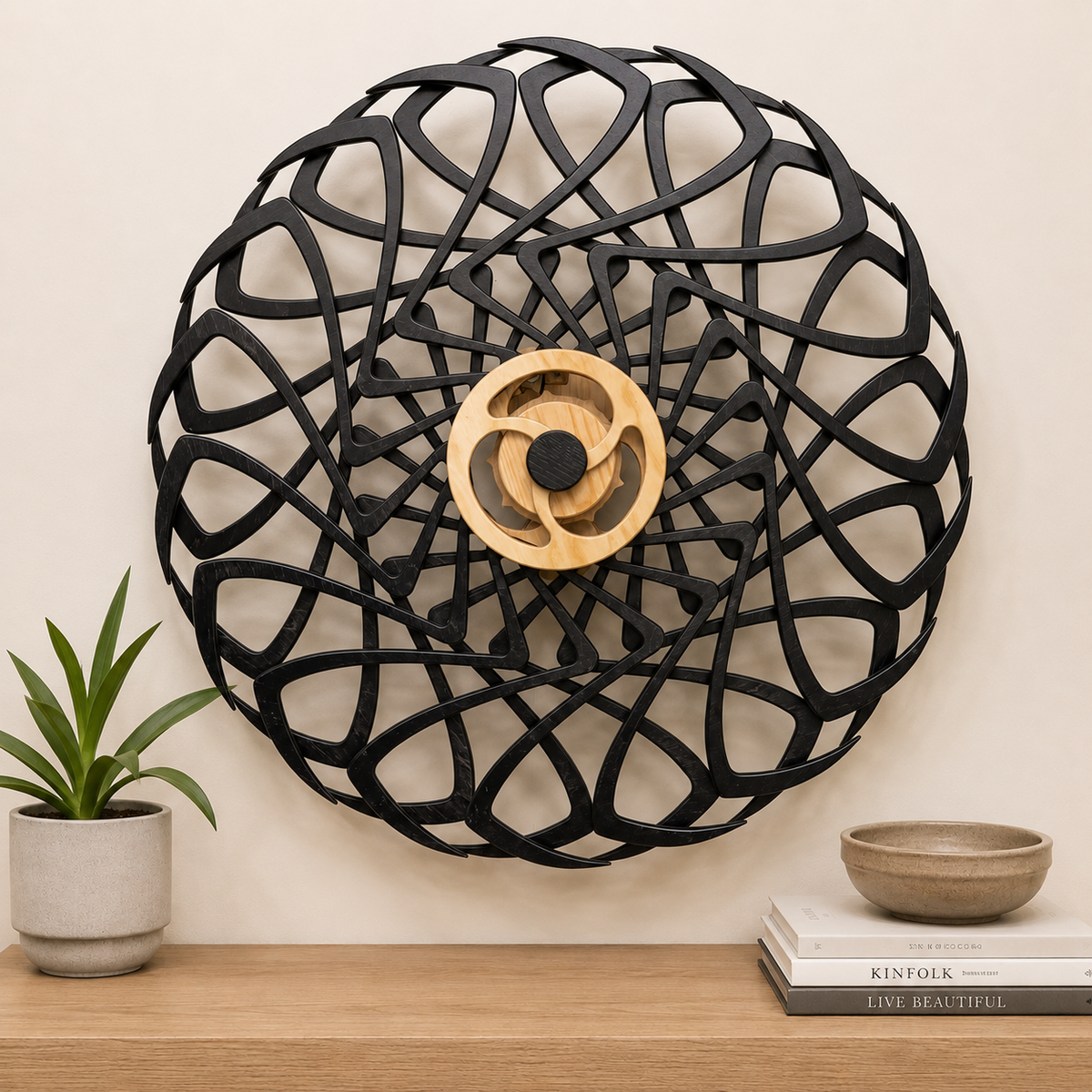
If you want to introduce a slower visual element into your bedroom, Kinetic Wall Art by Mindsight offers an alternative to screen-based stimulation.
The moving wall display creates continuously changing patterns through slow kinetic motion.
Instead of delivering notifications, videos, or information, it gives your attention something simple to observe.
That makes it particularly well suited to spaces designed for lower stimulation.
Consider placing it somewhere visible from:
- Your reading chair
- A relaxation corner
- Your bed
- A journaling space
- A meditation area
You can incorporate it into a simple evening cue:
- Put the phone down.
- Lower the lights.
- Sit somewhere comfortable.
- Watch the movement for a few moments.
- Breathe slowly.
- Let your attention stay with one thing instead of moving between multiple inputs.
The purpose is not to make every bedroom look the same.
It is to create visual experiences that support the atmosphere you want your space to have.
Kinetic Wall Art
A screen-free visual focal point with slow kinetic motion, designed to add calm movement to bedrooms, reading corners, and evening relaxation spaces.
Explore Kinetic Wall ArtFrequently Asked Questions
How can I make my bedroom feel more relaxing?
Start by reducing visible clutter, using softer evening lighting, limiting digital distractions, and choosing comfortable textures and calming sensory elements. Focus first on the parts of the room that create the most stimulation.
How can I make my bedroom relaxing without spending much money?
Decluttering, moving work items out of sight, changing where you charge your phone, reducing unnecessary decorations, and adjusting your evening lighting can make a significant difference without requiring major purchases.
What should I remove from my bedroom to make it calmer?
Consider removing work materials, unnecessary electronics, clutter, trash, unused objects, and anything that consistently reminds you of unfinished tasks. You do not need an empty room, just fewer competing visual cues.
How do I create a relaxing bedroom for adults?
Focus on comfort and lower stimulation. Use soft bedding, manageable lighting, fewer digital interruptions, intentional sound, and a clear separation between your sleeping space and work activities.
Should you keep your phone away from your bed?
If your phone regularly interrupts your wind-down routine, moving it farther away can help create a clearer boundary. You can place it across the room or charge it outside the bedroom if that works for your lifestyle.
What colors make a bedroom feel calming?
There is no single color that works for everyone. Many people prefer softer neutrals, muted natural tones, blues, or greens, but personal comfort matters most. Choose colors that make the room feel less visually demanding to you.
How can I make a small bedroom feel peaceful?
Focus on reducing visible clutter and unnecessary objects. Keep frequently used surfaces clear, choose a few intentional decorative elements, use softer lighting, and create one small area specifically for winding down.
Final Thoughts
A relaxing bedroom is not defined by expensive furniture or a perfect aesthetic.
It is defined by how the room makes you feel.
Does it ask for your attention?
Or does it give your attention somewhere to rest?
Start with the basics.
- Clear one surface.
- Lower the lights.
- Reduce digital noise.
- Make your bed comfortable.
- Remove reminders of work where possible.
- Create one calm focal point.
Then allow the room to become simpler over time.
If slow visual movement fits the atmosphere you want to create, Kinetic Wall Art by Mindsight can provide a screen-free focal point for a bedroom, reading corner, or evening relaxation space.
Your bedroom does not need more things demanding your attention.
Sometimes making it more relaxing means choosing fewer things, and choosing them more intentionally.
Explore Kinetic Wall Art
Add slow, screen-free visual movement to your bedroom or wind-down space.
Shop Kinetic Wall Art