How to Make Your Living Room Feel More Peaceful After a Busy Week
Your living room should help you unwind, not keep your mind busy. After a long week, small changes like reducing visual clutter, softening sound, and adding gentle movement can make your space feel easier to relax in.
A peaceful living room does not need to be perfect. It simply needs to help your body understand that the busy part of the week is finally slowing down.
Table of Contents
- Why Your Living Room Matters After a Busy Week
- How a Busy Space Keeps Your Mind Activated
- The Difference Between Relaxing and Just Sitting Down
- How Visual Clutter Affects the Way You Feel
- Simple Ways to Make Your Living Room Feel Calmer
- Why Sound and Gentle Movement Help Create Peace
- Using Calming Cloud and Kinetic Wall Art in Your Living Room
- Final Thoughts
Why Your Living Room Matters After a Busy Week
After a long week, your living room can either help you land or keep your mind buzzing.
It is often the place where you sit down after work, watch something, talk with family, drink coffee, fold laundry, scroll your phone, or try to do absolutely nothing for a few minutes.
But if the room feels cluttered, loud, visually busy, or filled with unfinished tasks, relaxing can feel harder than it should.
Your body may be sitting on the couch, but your mind may still be scanning.
The shoes near the door. The dishes on the table. The remote. The charger. The pile of things that needs to be moved. The TV. The phone beside you. The notifications. The week still hanging in the air like a backpack nobody put down.
A peaceful living room does not need to be perfect.
It just needs to help your body understand: the busy part is slowing down now.
How a Busy Space Keeps Your Mind Activated
Your environment sends signals to your nervous system all the time.
A busy living room can quietly tell your brain that there is still more to do. Even if you are trying to rest, your surroundings may keep pulling your attention toward little unfinished loops.
You may notice:
- Feeling restless while sitting down
- Reaching for your phone immediately
- Having trouble enjoying quiet time
- Feeling like the room is too visually loud
- Not fully relaxing even when you are tired
- Feeling annoyed by small messes
- Turning on the TV just to fill the space
This does not mean your living room needs to look like a hotel lobby.
Homes are lived in. A little mess is normal.
But if your space constantly reminds you of chores, screens, noise, and stress, your body may not fully shift into rest mode.
A calmer room can help your mind stop scanning and start settling.
The Difference Between Relaxing and Just Sitting Down
Sitting down is not always the same as relaxing.
You can be on the couch and still feel tense. You can be watching TV and still feel mentally overloaded. You can be scrolling and still feel like your brain is chewing on the whole week.
Real relaxation usually includes a shift in the body.
Your shoulders soften. Your breathing slows. Your thoughts become less urgent. Your attention feels less pulled apart.
That kind of relaxation often needs support from your environment.
If the room is overstimulating, your body may stay slightly alert. If the room feels calmer, your nervous system has an easier time letting go.
This is why small changes in your living room can make a big difference.
You are not just decorating.
You are creating cues for rest.
How Visual Clutter Affects the Way You Feel
Visual clutter is anything your brain has to keep noticing.
It might be a pile of mail, toys on the floor, too many objects on the coffee table, cords everywhere, dishes, laundry, bags, or random items that do not have a home.
Each thing may seem small, but together they create noise.
Your eyes take it in. Your brain sorts it. Your mind tags some of it as unfinished. That can make a room feel less peaceful even when nothing dramatic is happening.
Visual clutter can contribute to:
- Mental fatigue
- Restlessness
- A sense of overwhelm
- Difficulty relaxing
- More phone checking
- More irritation
- Less enjoyment of the space
The goal is not to make your living room empty.
The goal is to make it easier for your attention to rest.
Sometimes all it takes is clearing one surface, hiding loose items in a basket, or creating one peaceful corner that feels finished.
Simple Ways to Make Your Living Room Feel Calmer
You do not need to redesign your entire living room.
Start with small changes that reduce stimulation and make the room feel easier to be in.
Try this:
Clear the coffee table.
Keep only what feels useful or calming.
Use baskets for loose items.
A basket can quickly turn visual chaos into one neat container.
Dim harsh lighting.
Soft lamps or warmer light can help the room feel more restful.
Create a phone resting place.
Instead of keeping your phone beside you, place it across the room during downtime.
Lower background noise.
Turn off anything you are not actively watching or listening to.
Add one calming focal point.
This could be flowing water, slow movement, a plant, a candle, or a simple piece of art.
Reset the room once a week.
Spend ten minutes putting things back before the weekend begins.
The room does not need to become perfect.
It just needs to feel less like another task and more like a place where your body can exhale.
Why Sound and Gentle Movement Help Create Peace
A peaceful room is not only about what you see.
It is also about what you hear and feel.
Soft, steady sound can make a room feel less sharp. Gentle movement can give your eyes a calming place to rest. These small sensory cues help create an atmosphere that feels more grounded.
This matters because after a busy week, your nervous system may still be moving fast.
You may not be working anymore, but your body may still feel like it is bracing for the next thing.
Calming sensory cues can help soften that.
Helpful cues may include:
- Soft water sounds
- Slow visual movement
- Warm lighting
- Natural textures
- A tidy surface
- A comfortable blanket
- A calm corner without screens
- A simple visual anchor
The best calming cues do not demand your attention.
They quietly support it.
Using Calming Cloud and Kinetic Wall Art in Your Living Room
The Calming Cloud Tabletop Fountain and Kinetic Wall Art by Mindsight can help make your living room feel more peaceful through sound, movement, and visual calm.
The Calming Cloud Tabletop Fountain adds gentle water movement, soft light, and the sound of rain to your space. It can support sleep, relaxation, meditation, mindful environments, and calm workspaces.
You can use the Calming Cloud in your living room:
- On a side table
- On a console table
- Near a reading chair
- In a quiet corner
- During evening wind-down time
- During meditation or breathing practice
- While relaxing after work
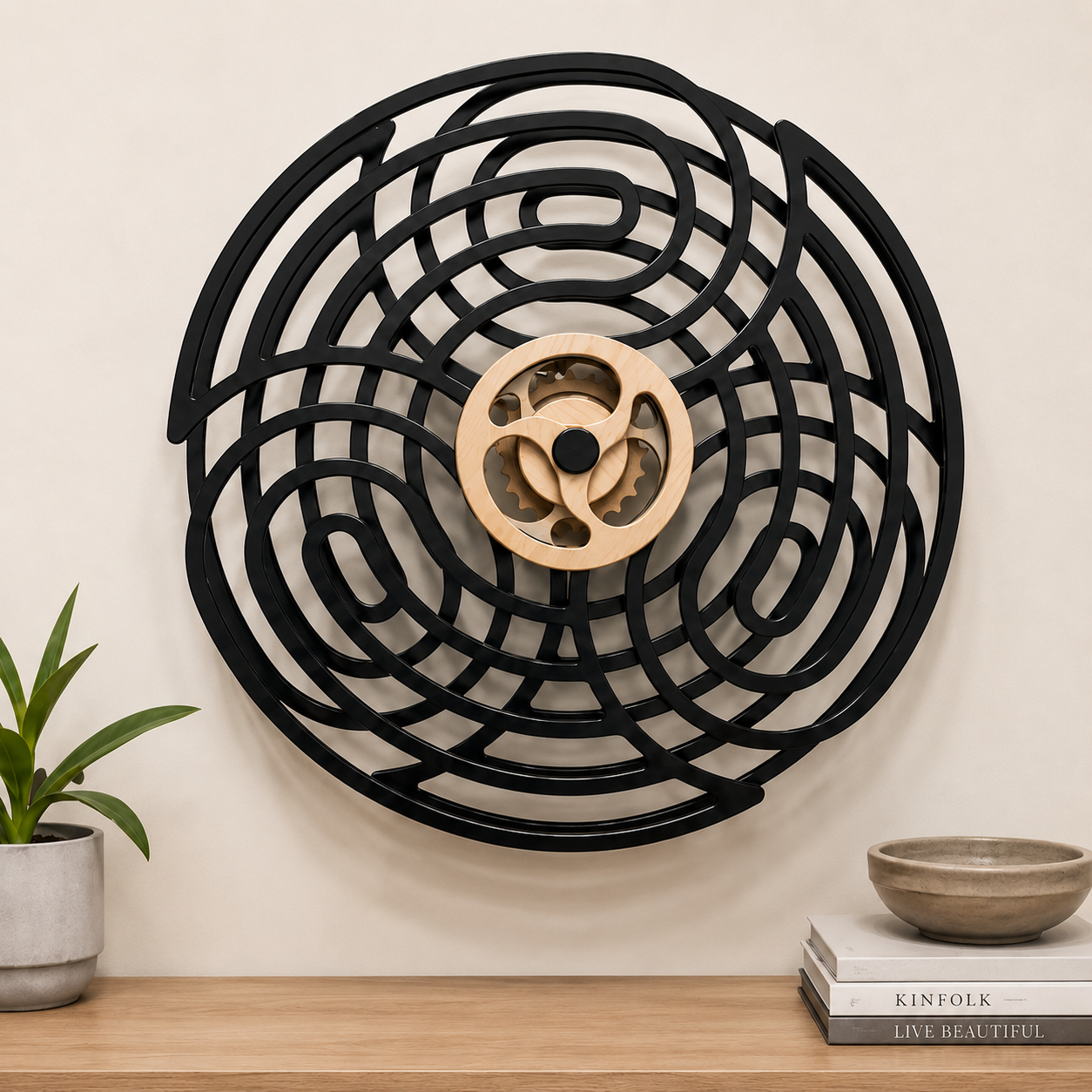
Kinetic Wall Art adds slow, rhythmic motion to the room. Instead of pulling your attention like a screen, it creates a calming visual focal point that can help the space feel more grounded.
You can use Kinetic Wall Art in:
- Living rooms
- Home offices
- Creative spaces
- Reading corners
- Meditation spaces
- Therapy rooms
- Quiet reset areas
Together, these tools can help your living room feel less busy and more intentional.
The Calming Cloud softens the room with water, light, and sound. Kinetic Wall Art adds slow visual rhythm that gives your eyes somewhere peaceful to land.
Calming Cloud Tabletop Fountain
A calming tabletop fountain that adds gentle water movement, soft light, and peaceful rain-like sound to your living room, bedroom, or quiet reset space.
Explore the Calming CloudKinetic Wall Art
Moving wall art that adds slow visual rhythm and a calming focal point to living rooms, offices, creative spaces, and relaxation areas.
Explore Kinetic Wall ArtFinal Thoughts
After a busy week, your living room should not feel like one more place that asks something from you.
It should help you slow down.
A peaceful living room is built through small choices: less visual clutter, softer light, calmer sound, gentle movement, and fewer screens pulling at your attention.
You do not need a perfect home to feel more at ease.
Start with one surface. One corner. One calming cue.
Clear the coffee table. Lower the lights. Move your phone away. Add something gentle for your eyes or ears to rest on.
Let your living room become more than a place to sit.
Let it become a place where the week finally loosens its grip.