How to Stop Reaching for Your Phone
Most people do not consciously decide to check their phone dozens of times per day. It usually happens automatically. You finish one task, wait a few seconds, feel slightly bored, and suddenly your hand is reaching for your device.
Over time, this pattern can become deeply wired. Phone checking becomes less of a decision and more of a reflex. You may not even notice the moment the habit begins.
The challenge is not always a lack of discipline. Often, the real challenge is that the habit has become invisible. To change it, you need awareness, better boundaries, and an environment that makes automatic checking less easy.
Table of Contents
Why Phone Checking Becomes Automatic
Phone checking often starts with small moments. You finish an email. You wait for a page to load. You feel bored during a pause. You want a quick break from a difficult task.
Without thinking, your hand reaches for your phone. One check turns into another, and the habit repeats throughout the day.
Checking devices becomes automatic because it happens so often. Each repetition teaches the brain that the phone is the default response to boredom, stress, waiting, discomfort, or transition.
Over time, the habit can become hard to see. You may not feel like you are choosing your phone. It simply appears in your hand.
The Habit Loop Behind Phone Use
Most habits follow a predictable pattern: cue, routine, and reward.
The cue triggers the behavior. The behavior becomes the routine. Then the brain receives some type of reward.
Phone habits often work like this:
- Cue: A pause in work, stress, boredom, waiting, or mental fatigue.
- Routine: Unlocking your phone, opening apps, checking messages, or scrolling.
- Reward: Novelty, entertainment, information, connection, or a quick escape.
Small rewards repeated consistently create strong habits. Eventually, the brain begins expecting the reward before you even consciously decide to check.
The first step to changing phone habits is noticing the loop before it finishes running on autopilot.
Why Willpower Usually Fails
Many people try to reduce phone use through self-control alone. They promise themselves they will check less, stay focused, or only look for a minute.
The problem is that willpower requires constant effort. When your phone stays nearby, your brain has to repeatedly resist temptation throughout the day.
Every pause becomes a decision. Every difficult task becomes a chance to escape. Every moment of boredom becomes a small negotiation.
That creates friction internally. Behavior change often works better when friction exists externally. Instead of trying harder, you change the environment so the habit becomes less automatic.
The Hidden Triggers That Make You Reach for Your Phone
Phone habits are often tied to emotional states. Stress, mental fatigue, discomfort, uncertainty, and boredom can all trigger the urge to reach for your device.
The phone becomes a quick escape. It offers a small break, a temporary reward, or a way to avoid discomfort for a moment.
But frequent interruptions can create larger problems over time, including:
- Reduced focus
- Less presence
- Lower productivity
- Mental overload
- More scattered attention
- Difficulty staying with important tasks
The first step toward changing the behavior is noticing the triggers. Awareness creates choice. Choice creates the possibility of a different response.
How Accessibility Shapes Behavior
Easier behaviors happen more often. If your phone stays next to you constantly, reaching for it becomes effortless.
Small increases in effort can create surprisingly meaningful behavior changes. When your phone is slightly harder to access, your brain has a moment to pause before the habit continues.
Helpful examples include:
- Keeping phones out of bedrooms
- Creating screen-free work blocks
- Building device-free routines
- Adding physical boundaries
- Putting your phone away during meals
- Creating evening phone cutoffs
The goal is not removing technology entirely. The goal is making technology intentional.
Creating Better Boundaries Around Technology
Healthy boundaries create structure, and structure supports habits. Instead of deciding all day whether to check your phone, you create clear moments when your phone is available and clear moments when it is not.
Try creating intentional phone boundaries such as:
- Keep phones away during meals
- Create device-free mornings
- Protect focused work periods
- Build screen-free evening routines
- Create technology-free spaces inside your home
- Use phone-free blocks for reading, rest, or family time
Consistency matters more than perfection. Small boundaries repeated consistently can create long-term behavior change.
Why Physical Friction Changes Habits
Physical friction interrupts automatic behavior. If checking your phone becomes slightly harder, your brain pauses.
That pause creates awareness. Awareness creates choice. Choice creates change.
This is one reason physical behavior tools can work so effectively. They reduce reliance on motivation and allow your environment to support your goals.
Instead of fighting the same urge again and again, you make the habit harder to perform automatically.
Timed Lock Box
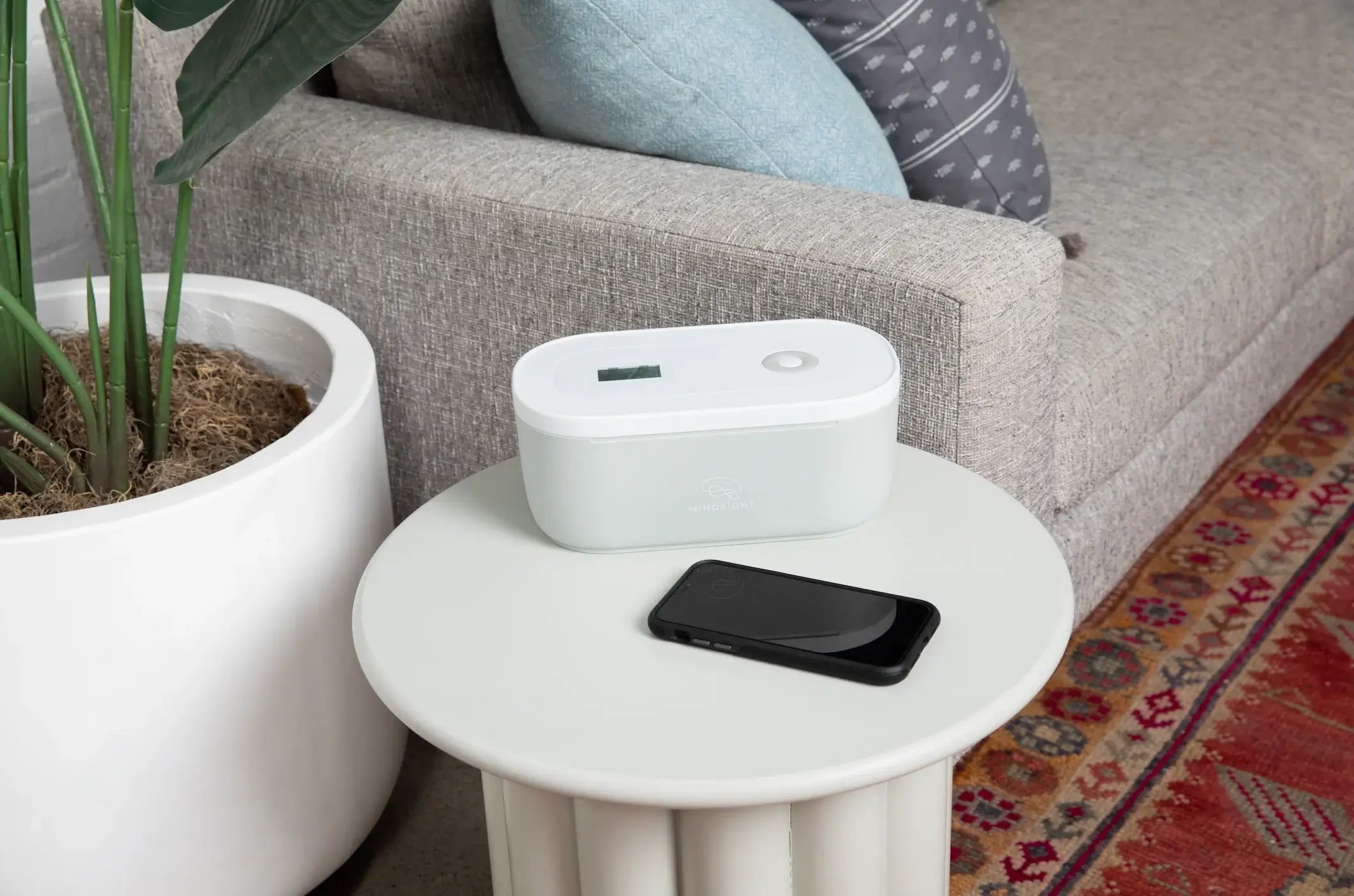
The Timed Lock Box by Mindsight creates intentional physical boundaries around technology.
Instead of relying entirely on self-control, you place your phone inside and set a timer. The phone stays unavailable until the selected period ends.
This creates friction, and that friction interrupts automatic habits. It gives your attention a protected window where checking your phone is no longer the easiest option.
Many people use the Timed Lock Box for:
- Focused work sessions
- Study blocks
- Family dinners
- Reading time
- Screen-free evenings
- Weekend resets
- Phone-free mornings
Phone boundaries become easier when your environment supports them.
Timed Lock Box
A simple physical boundary that helps reduce automatic phone checking, protect focus, and create more intentional screen-free time.
Explore the Timed Lock BoxFinal Thoughts
Phone habits often form quietly. One check becomes many. Small interruptions become daily patterns.
Breaking those patterns does not require perfection. It requires awareness, boundaries, systems, and physical friction that helps interrupt automatic behavior.
The Timed Lock Box creates a practical way to support healthier phone habits without relying entirely on willpower. By making your phone less accessible during key moments, you give your attention more room to stay where you want it.
Small environmental changes often create lasting behavior change. Start with one phone-free window, create one boundary, and let your attention come back to you.