How to Stop Checking Your Phone Constantly
You reach for your phone without thinking. It happens while waiting in line, sitting at your desk, watching TV, having a conversation, or moving between tasks. Sometimes there is a reason to check it. Other times, your hand simply moves before your mind has made a decision.
This habit can feel small, but repeated throughout the day, it can quietly drain your focus, time, and presence. A quick glance can turn into a scroll. One notification can become several minutes of distraction. A tiny pause in the day can become another automatic phone check.
The good news is that constant phone checking can be changed. The key is not to rely only on willpower. It is to understand how the habit works and create boundaries that make intentional phone use easier.
Table of Contents
- The Habit You Can’t Ignore
- Why You Check Your Phone Without Thinking
- The Psychology Behind Constant Checking
- Why Notifications Aren’t the Real Problem
- The Role of Accessibility in Phone Habits
- How to Create Real Boundaries That Work
- Using a Timed Lock Box to Break the Habit
- Simple Ways to Check Your Phone Less
- Conclusion: Take Control of Your Attention
The Habit You Can’t Ignore
Most people do not realize how often they check their phones. It happens in tiny moments, usually too quickly to notice. You may check while waiting for a page to load, between emails, during commercials, before getting out of bed, or right before going to sleep.
The habit becomes so familiar that it starts to feel like background behavior. You may not even be looking for anything specific. You are simply checking because checking has become part of the rhythm of your day.
This pattern is not accidental. Phones and apps are designed to keep your attention close. New messages, alerts, feeds, updates, and visual cues all make the device feel worth checking again and again.
Once you understand that the habit has been trained, you can begin to untrain it.
Why You Check Your Phone Without Thinking
Phone checking becomes automatic because it is repeated so often. Every time you unlock your phone, your brain expects some kind of reward. That reward might be a message, a notification, a funny video, an update, or simply something new to look at.
Over time, your brain begins to connect the action with the possibility of reward. The more often that connection repeats, the less intentional the behavior becomes.
Eventually, you may no longer need a clear reason to check your phone. Boredom, stress, curiosity, waiting, silence, or even a difficult moment in your work can trigger the habit.
Because the phone is usually nearby, the habit has very little resistance. The impulse appears, the phone is within reach, and the action happens almost instantly.
The Psychology Behind Constant Checking
Constant phone checking often follows a simple habit loop: cue, routine, and reward.
- Cue: You feel bored, stressed, curious, interrupted, or notice a notification.
- Routine: You pick up your phone and check it.
- Reward: You receive novelty, information, entertainment, connection, or relief.
This loop reinforces itself over time. The more often it repeats, the more automatic it becomes. Your brain learns that checking your phone is an easy way to respond to nearly any pause or uncomfortable feeling.
To change the habit, you need to interrupt the loop. One of the most effective ways to do that is by making the routine harder to perform.
Constant phone checking is not just a notification problem. It is a habit loop problem, and habit loops change more easily when your environment changes too.
Why Notifications Aren’t the Real Problem
Turning off notifications can help, but it does not always solve the habit completely. Many people still check their phones even when nothing has buzzed, dinged, or lit up.
That happens because the habit eventually becomes internal. Your brain starts seeking the reward on its own. You may check because you wonder if something happened, because you feel bored, or because a quiet moment feels uncomfortable.
Notifications are only one trigger. The deeper pattern is the expectation that your phone might offer something new.
This is why creating stronger boundaries can be more effective than simply silencing alerts. You are not only reducing interruptions. You are changing how easy it is to act on the urge.
The Role of Accessibility in Phone Habits
One of the biggest drivers of phone use is accessibility. Your phone is usually within reach. It sits on your desk, in your pocket, beside your bed, or next to you on the couch.
The easier a behavior is to perform, the more often it tends to happen. If your phone is right beside you, checking it requires almost no effort. There is no meaningful pause between the impulse and the action.
When you create even a small amount of friction, the habit becomes less automatic. Putting your phone in another room, inside a drawer, or behind a physical barrier gives your brain a moment to choose.
That moment matters. It turns a reflex back into a decision.
How to Create Real Boundaries That Work
Effective behavior change often starts with your environment. Instead of trying to control your actions in the exact moment the urge appears, you design your space so the unwanted habit is less convenient.
For phone use, this means creating distance between you and your device during the times you want to be focused, present, or offline.
Real boundaries can include:
- Keeping your phone out of the bedroom
- Putting your phone away during meals
- Leaving your phone in another room during focused work
- Using specific phone-checking windows instead of checking all day
- Creating phone-free zones for conversations, rest, or family time
Boundaries work best when they are clear, physical, and easy to repeat. The less you have to negotiate with yourself, the more likely the habit is to change.
Using a Timed Lock Box to Break the Habit
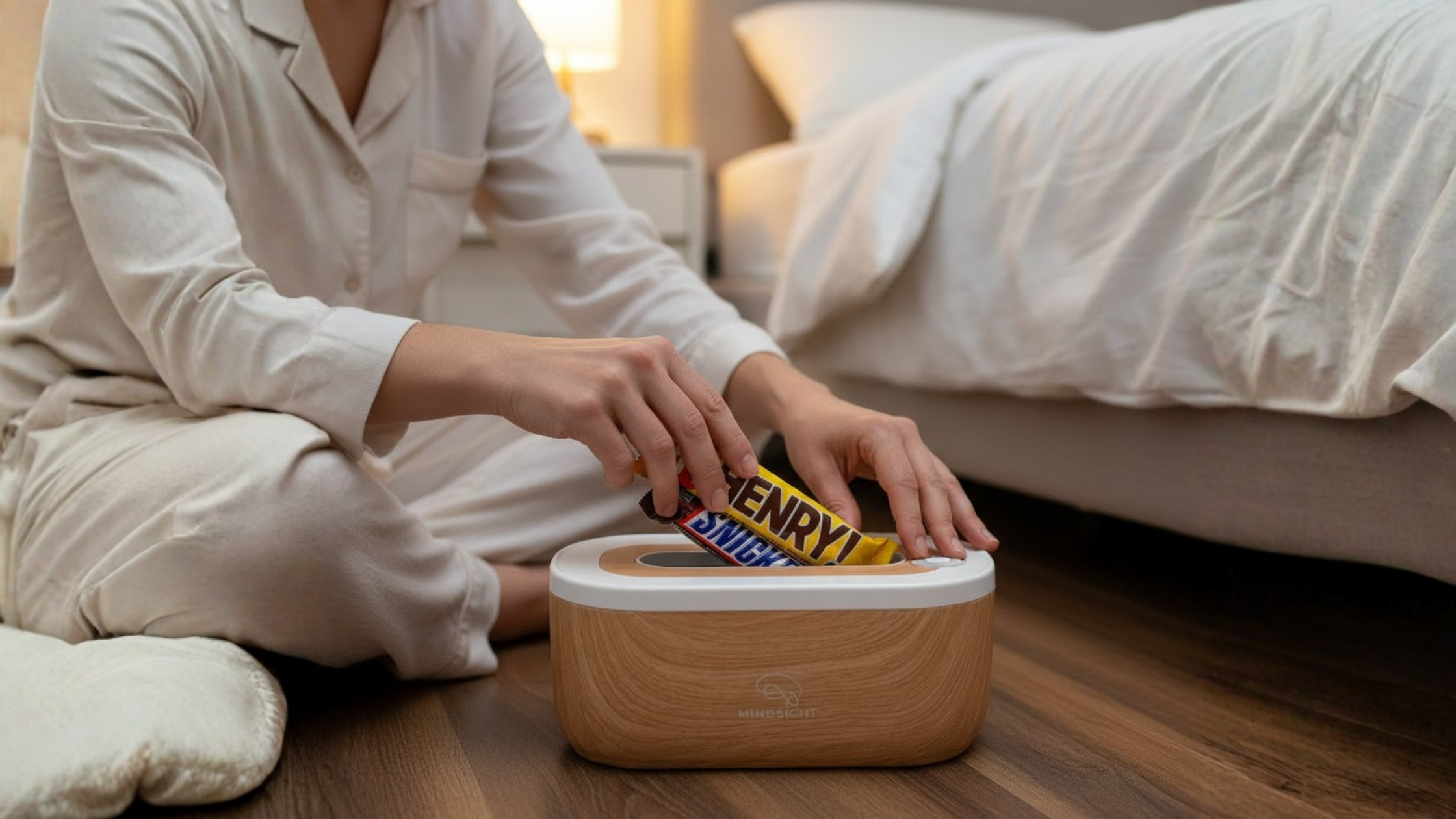
The Timed Lock Box by Mindsight is designed to create a physical boundary between you and your phone. You place your device inside, set a timer, and create a screen-free window that supports your intention.
This kind of tool is helpful because it removes the need to keep resisting the same urge again and again. Instead of deciding fifty times not to check your phone, you make the decision once.
A timed lock box can help:
- Interrupt automatic phone-checking habits
- Reduce distractions during work or study
- Encourage more intentional phone use
- Support phone-free meals, evenings, or family time
- Create healthier daily routines
The goal is not to punish yourself or remove your phone forever. The goal is to protect the moments when you want your attention to belong somewhere else.
Timed Lock Box
Create a simple physical boundary for your phone so you can reduce automatic checking and use your attention more intentionally.
Explore the Timed Lock BoxSimple Ways to Check Your Phone Less
Physical boundaries work even better when paired with small daily habits. You do not need to change everything overnight. Start with one or two adjustments and repeat them consistently.
Keep Your Phone Out of Sight
Place your phone in another room, in a drawer, or away from your main workspace when you need to focus. If you cannot see it, you are less likely to reach for it automatically.
Use Designated Check Times
Instead of checking constantly, choose specific times to review messages or notifications. This helps your brain learn that phone use has a place in your day without taking over the whole day.
Replace the Habit
When you feel the urge to check your phone, replace the action with something small. Take a breath, stretch your hands, stand up, drink water, or write down the thought that made you want to check.
Create Phone-Free Zones
Choose certain spaces or moments where your phone does not belong. Meals, conversations, bedtime, and focused work blocks are good places to start.
These strategies work best when they reduce accessibility. The more distance you create from your phone, the easier it becomes to change the habit.
Conclusion: Take Control of Your Attention
Constantly checking your phone may seem like a small habit, but it can have a large effect on your focus, time, and presence.
When you understand the habit loop behind phone checking, you can start changing it with more compassion and less frustration. You do not need to win a willpower battle every hour. You need better boundaries that make the habit less automatic.
Tools like the Timed Lock Box can support that change by creating physical separation from your phone during the moments you want to protect.
The goal is not to eliminate phone use. The goal is to use your phone with intention, instead of letting it quietly interrupt every pause in your day.
Start small. Create one phone-free window. Put your attention somewhere worth keeping. Let your environment help you follow through.