How to Focus Better While Working From Home
Working from home gives you flexibility, comfort, and control over your day. But it also comes with a quiet challenge: staying focused when your home is full of distractions.
Household tasks, notifications, family needs, clutter, and personal habits can all compete for your attention. Without the built-in structure of an office, it becomes easier for your focus to drift from one thing to the next.
The solution is not always another productivity app or a stricter schedule. Sometimes, the biggest shift comes from designing your workspace in a way that helps your brain concentrate instead of constantly pulling it toward distraction.
Table of Contents
- The Challenge of Staying Focused at Home
- Why Working From Home Feels More Distracting
- The Hidden Role of Your Environment
- How Visual Distractions Reduce Productivity
- Creating a Workspace That Supports Focus
- Why Movement Can Improve Concentration
- Kinetic Wall Art as a Focus Tool
- Simple Habits to Stay Focused Throughout the Day
- Conclusion: Build a Workspace That Works With You
The Challenge of Staying Focused at Home
At home, focus has to compete with everything else in your environment. You may sit down to work, but your brain is still aware of laundry, dishes, your phone, household noise, or the comfort of the couch nearby.
These distractions can seem small, but they add up. Each one creates a tiny pull on your attention. Over time, that makes it harder to stay with one task long enough to do deep, meaningful work.
Many people blame themselves for being unfocused at home, but the issue is often environmental. Your space may not be clearly telling your brain, “This is where focused work happens.”
Improving focus starts by creating clearer cues around work, attention, and boundaries.
Why Working From Home Feels More Distracting
In an office, the environment usually has one main purpose: work. At home, the same space may need to support rest, meals, family time, entertainment, chores, and productivity.
This creates blurred boundaries. Your brain may be trying to focus on work while also noticing everything else that belongs to home life.
That can lead to context switching, where your attention keeps jumping between work and non-work cues. You may start a task, remember something you need to clean, check your phone, open another tab, or get up for something unrelated.
The more often your attention switches, the harder it becomes to stay focused for long periods.
Working from home becomes easier when your space creates boundaries for your attention, not just comfort for your body.
The Hidden Role of Your Environment
Your environment constantly influences your behavior. Every object, sound, and visual element in your workspace sends a signal to your brain.
A messy desk may signal unfinished tasks. A visible phone may invite checking. A noisy background may keep your nervous system alert. A cluttered room may make your mind feel crowded before the work even begins.
When your workspace is visually busy, your brain has to filter through more information. That filtering uses mental energy, even if you are not fully aware of it.
A well-designed workspace reduces unnecessary input so your attention has fewer places to wander.
How Visual Distractions Reduce Productivity
Visual distractions are easy to underestimate. You may think you are ignoring the clutter, open tabs, extra devices, or busy background around you, but your brain is still processing what it sees.
Multiple screens, piles of papers, moving notifications, and crowded surfaces can all compete for attention. Your brain is naturally drawn to contrast and movement, which means unpredictable visuals can interrupt your focus quickly.
Reducing visual noise gives your mind more room to stay with the task in front of you. This is one reason clean, simple workspaces often feel more productive.
The goal is not to make your workspace perfect. The goal is to make it easier for your brain to know where to look and what to ignore.
Creating a Workspace That Supports Focus
A productive workspace does not need to be complicated. Small changes can make a noticeable difference in how focused and steady your workday feels.
Keep Your Space Organized
Remove unnecessary items from your desk before starting work. Keep only the tools you need for the task in front of you. A clearer desk can help create a clearer mental starting point.
Use Natural Lighting
If possible, position your workspace near a window or natural light source. Natural light can make the space feel more open and energizing, which may help support alertness during the day.
Limit Digital Distractions
Close non-essential tabs, silence notifications, and keep extra devices out of your immediate view. The fewer digital invitations you see, the easier it is to stay with one task.
Create a Dedicated Work Area
A dedicated work area helps your brain associate one space with focus. It does not need to be a full office. Even a small desk, corner, or table setup can become a work zone when used consistently.
Why Movement Can Improve Concentration
Not all movement is distracting. Fast, unpredictable movement can pull your attention away, but slow, consistent movement can create a calming effect.
Gentle motion gives your mind a soft visual anchor. It can be helpful during short breaks, moments of mental fatigue, or transitions between tasks.
Instead of reaching for your phone or opening another screen, a calming visual element can give your eyes something restful to focus on. This can help reset attention without adding more digital stimulation.
The key is subtlety. Supportive movement should feel steady and calming, not loud or demanding.
Kinetic Wall Art as a Focus Tool
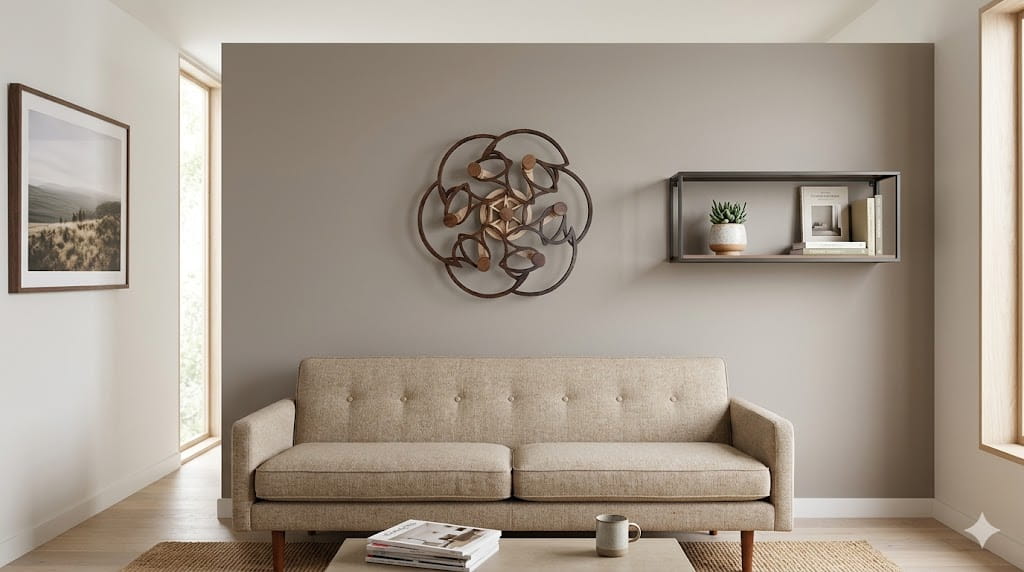
The Kinetic Wall Art by Mindsight introduces slow, intentional motion into your workspace. Its gentle movement creates a calming visual rhythm without the overstimulation of a screen.
This can make it a useful addition to a home office, reading corner, desk area, or creative workspace. It adds a visual point of interest while still supporting a calm environment.
Kinetic Wall Art can help by:
- Providing a visual break without screen stimulation
- Reducing mental fatigue during long work sessions
- Encouraging mindful pauses throughout the day
- Giving your eyes a gentle rest from constant screen exposure
- Adding calm movement to a focused workspace
Instead of competing for your attention, it works best as a subtle background cue that helps the space feel more focused and intentional.
Kinetic Wall Art
A calming visual tool that adds slow, steady movement to your workspace without the distraction of another screen.
Explore Kinetic Wall ArtSimple Habits to Stay Focused Throughout the Day
A supportive workspace is powerful, but daily habits help reinforce it. The best habits are simple enough to repeat without feeling like another full productivity system.
Work in Time Blocks
Choose focused intervals for your work, followed by short breaks. Time blocks give your brain a clear container, which makes it easier to begin and easier to pause intentionally.
Reduce Multitasking
Focus on one task at a time whenever possible. Multitasking may feel productive, but it often creates more mental switching and lowers the quality of your attention.
Take Intentional Breaks
Step away from your workspace briefly during breaks. Stretch, walk, refill your water, or look out a window. Try to avoid turning every break into more screen time.
Limit Phone Access
Keep your phone out of reach during deep work sessions. Even small amounts of distance can reduce the urge to check it automatically.
These habits help your environment do its job. Together, they create a workday with fewer distractions and more room for real concentration.
Conclusion: Build a Workspace That Works With You
Focusing while working from home is not just about trying harder. It is about creating conditions that make attention easier to sustain.
When your workspace is cluttered, noisy, or full of competing cues, your brain has to work harder to concentrate. When your environment is calm, organized, and intentionally designed, focus becomes less of a fight.
Simple changes like clearing your desk, reducing visual distractions, limiting phone access, and adding supportive elements like Kinetic Wall Art can help your workspace feel more grounded and productive.
Start with one small adjustment. Let your workspace become a place that works with your attention instead of quietly pulling it apart.