The Evening Routine That Helps You Stop Scrolling and Actually Relax
Evening scrolling can feel harmless at first. You sit down after a long day, open your phone for a few minutes, and tell yourself you are just taking a break.
But a few minutes can quickly become half an hour. Then an hour. By the time you put your phone down, you may feel more wired, tired, or frustrated than rested.
A screen-free evening routine can help you unplug, reduce nighttime stress, and give your nervous system a clearer path into real rest.
Table of Contents
- Why Evening Scrolling Feels So Hard to Stop
- How Your Phone Keeps Your Brain Awake
- Why “Just One More Minute” Turns Into an Hour
- The Difference Between Rest and Digital Distraction
- How to Build a Screen-Free Evening Routine
- What to Do Instead of Scrolling at Night
- Using Physical Boundaries to Protect Your Evening
- How Timed Lock Box and Driftband Support Nighttime Calm
- Final Thoughts
Why Evening Scrolling Feels So Hard to Stop
Evening scrolling often starts innocently.
You sit down after a long day. You want a break. You open your phone for a few minutes, maybe to check one message, watch one video, or scroll until you feel relaxed.
But somehow, a few minutes turns into half an hour.
Then an hour.
You may not even feel better afterward. Sometimes you feel more wired, more tired, or more annoyed that you stayed on your phone longer than you planned.
This happens because your brain is looking for relief at the end of the day. Your phone offers quick stimulation, easy entertainment, and a temporary escape from responsibilities.
The problem is that digital stimulation is not the same thing as real rest.
Scrolling may distract you from stress for a little while, but it does not always help your nervous system settle.
A better evening routine gives your brain what it actually needs: fewer inputs, clearer boundaries, and a slower path into rest.
How Your Phone Keeps Your Brain Awake
Your phone is designed to keep your attention active.
Every app offers something new. A new post. A new message. A new video. A new headline. A new idea. Even when the content is not stressful, your brain still has to process it.
At night, this can make it harder to wind down.
Your brain needs time to shift from daytime alertness into evening recovery. When you keep feeding it new information, that transition becomes harder.
Phone use before bed can keep your mind engaged through:
- Bright screen exposure
- Short-form videos
- Social media updates
- Work messages
- News or stressful content
- Notifications
- Endless scrolling
- Mental comparison
- Emotional stimulation
Even if your body feels tired, your mind may stay activated.
That is why you can feel exhausted and still struggle to relax.
Why “Just One More Minute” Turns Into an Hour
The phrase “just one more minute” is sneaky little raccoon logic.
You mean it when you say it. But apps are built to make stopping difficult.
Scrolling does not have a natural ending. There is always another post, another video, another comment, another notification, another reason to keep looking.
Your brain also receives small rewards along the way. Something funny. Something interesting. Something surprising. Something emotionally charged.
Those small rewards keep the loop going.
This is why stopping can feel harder than starting. Once your brain is inside the scroll, it keeps expecting the next little reward.
The best way to stop the loop is not always to fight it after it begins. It is to create an evening structure that makes the loop less likely to start.
Real rest needs space. Scrolling keeps filling that space with more input.
The Difference Between Rest and Digital Distraction
Digital distraction can feel like rest because it gives you a break from your thoughts.
But true rest feels different.
Rest helps your body soften. It helps your mind slow down. It creates space instead of filling every quiet moment with more information.
Digital distraction often keeps the brain busy while the body stays still. That can leave you feeling strangely tired but not restored.
Real rest may look like:
- Reading
- Stretching
- Taking a warm shower
- Listening to calm music
- Journaling
- Breathing slowly
- Preparing for tomorrow
- Tidying one small area
- Talking with someone you love
- Lying down without a screen
- Doing nothing for a few minutes
At first, these options may feel less exciting than your phone. That is normal. Your brain is used to fast stimulation.
But with repetition, quieter evening habits begin to feel more satisfying because they actually help you recover.
How to Build a Screen-Free Evening Routine
A screen-free evening routine does not need to be perfect. It does not mean you can never use your phone at night.
It simply means creating a protected window where your brain can begin to slow down.
Start with a realistic time frame. Even 20 to 30 minutes before bed can make a difference.
Here is a simple routine you can follow:
Choose your phone cutoff time.
Pick a time when your phone will be put away for the night or placed somewhere out of reach.
Create a small closing ritual.
Check anything important, send final messages, set alarms, and then stop reopening apps.
Move your phone away from your bed.
Keep it outside the bedroom, across the room, or inside a timed lock box.
Lower stimulation.
Dim lights, reduce noise, and avoid content that makes your brain more alert.
Choose one calming activity.
Read, stretch, breathe, journal, tidy your space, or prepare for sleep.
Repeat the same pattern.
Consistency helps your brain learn that this routine means rest is coming.
The goal is to make the evening feel less like a cliff and more like a soft landing.
What to Do Instead of Scrolling at Night
One reason people go back to scrolling is that they remove the phone but do not replace the habit.
Your brain still wants something.
So give it something calmer.
Try replacing nighttime scrolling with:
- A short walk around the house
- Light stretching
- A warm drink
- A simple skincare routine
- Reading a few pages
- Writing down tomorrow’s top priorities
- Breathing exercises
- Folding laundry slowly
- Listening to quiet music
- Preparing your clothes for the next day
- Using a calming wearable cue
- Sitting in low light for a few minutes
The replacement should feel easy. If it feels too complicated, you probably will not do it consistently.
Choose something that helps your body slow down without making your brain chase more input.
Using Physical Boundaries to Protect Your Evening
Evening phone habits are hard to change when your phone is still nearby.
If it is on your nightstand, your desk, or next to you on the couch, the option to check it is always available.
That means your brain has to keep choosing not to check.
Physical boundaries make the choice easier.
Instead of relying on willpower, you change the environment so the habit becomes harder to perform automatically.
Physical boundaries may include:
- Charging your phone outside the bedroom
- Keeping your phone in another room after a certain time
- Placing your phone in a drawer during wind-down time
- Creating a no-phone bedroom rule
- Using a timed lock box for evening resets
- Keeping screens away from your bed
These boundaries are not about being strict for the sake of it. They are about protecting your evening from the little interruptions that keep your mind awake.
How Timed Lock Box and Driftband Support Nighttime Calm
The Timed Lock Box and Driftband by Mindsight can support a calmer evening routine in different ways.
The Timed Lock Box helps create a physical boundary around your phone. You place your phone inside, set the timer, and give yourself a screen-free window without having to keep negotiating with yourself.
It can be helpful for:
- Evening phone cutoffs
- Screen-free dinners
- Reading time
- Bedtime wind-down routines
- Family time
- Weekend resets
- Breaking the “just one more scroll” habit
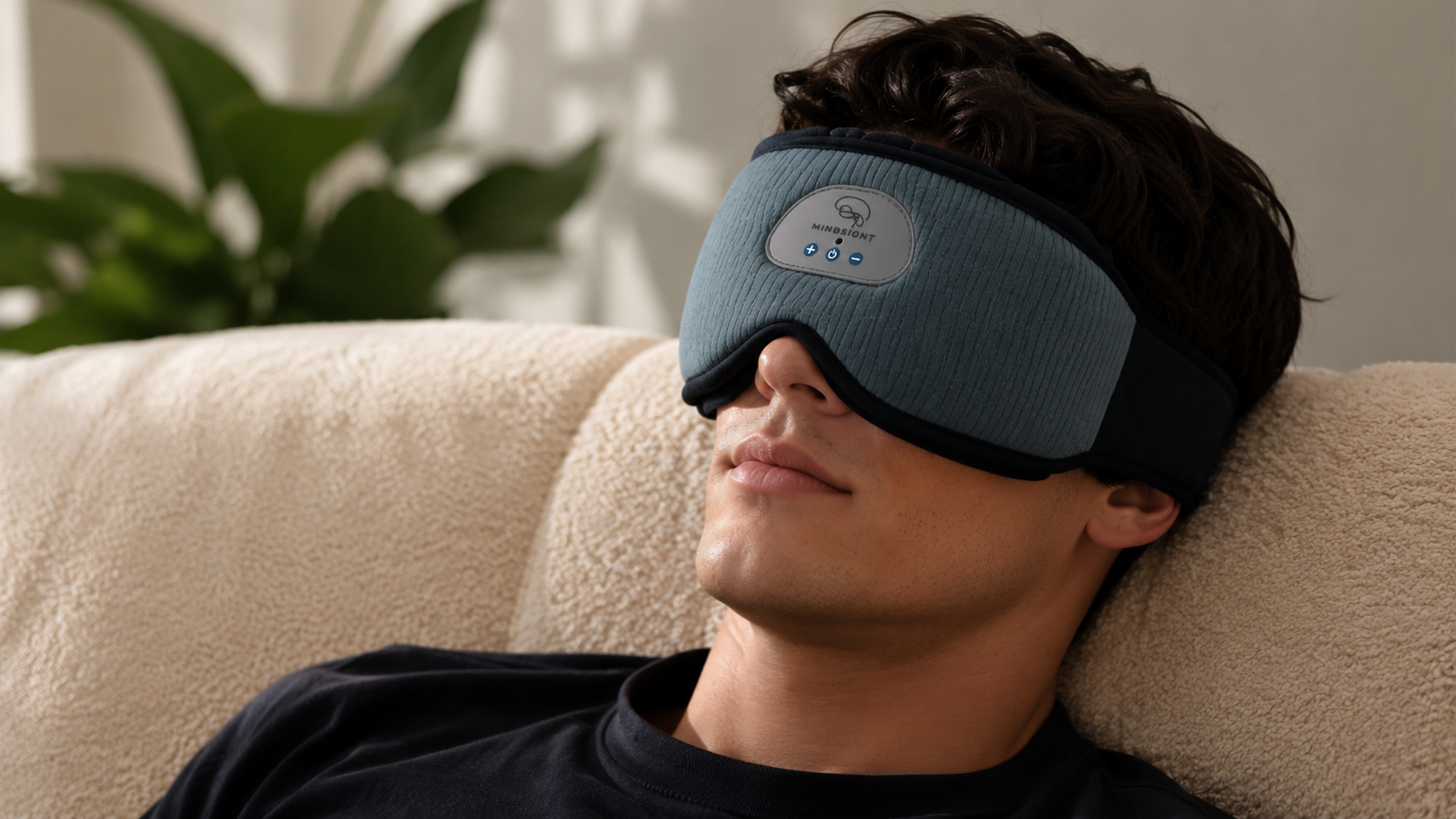
The Driftband supports the transition into rest by becoming part of a calming nighttime routine. It can serve as a wearable cue that helps remind your body the day is winding down.
It can be helpful for:
- Pre-sleep relaxation
- Breathing practice
- Evening decompression
- Creating bedtime consistency
- Reducing screen-based sleep habits
- Building a calming ritual before bed
Together, they create a simple rhythm: the Timed Lock Box helps remove the phone, and Driftband helps reinforce the shift into rest.
Timed Lock Box
A simple way to create a screen-free evening window by placing your phone inside and setting a timer.
Explore the Timed Lock BoxDriftband
A wearable cue that supports a calmer bedtime routine and helps reinforce the transition into rest.
Explore DriftbandFinal Thoughts
If you keep scrolling at night, it does not mean you are lazy or undisciplined. It means your brain has learned to seek quick relief from a device that is always within reach.
But relief and rest are not the same thing.
A calmer evening routine helps you create space between your day and your sleep. It gives your nervous system time to settle, your mind time to quiet down, and your body clearer signals that rest is beginning.
Start small.
Choose one screen-free window. Put your phone away. Pick one calming activity. Let your evening become less about escaping the day and more about gently closing it.
Sometimes real relaxation begins the moment the screen goes dark.